Wednesday, 30 September 2026

Murder at Rainhill Asylum

In 1866 an inmate at the Rainhill Asylum killed another whilst they were both working in the kitchens. 

Rainhill Asylum in 1890s (St Helens Heritage)

On 22nd June that year John Armstrong was rescued after jumping into the River Mersey. The following morning he appeared at the police court, having been charged with attempting to commit suicide and he was remanded so that he could be seen by a doctor. The Liverpool Albion reported that he was "evidently out of his mind."

Armstrong stated that he was convinced that others were designing to kill him and he was sent to the County Asylum at Rainhill (photo St Helens Heritage) Doctors there believed that he was suicidal due to the delusions caused by excessive alcohol but did not see him as a danger to others. By the beginning of August he was close to being fit for discharge and only being kept there as a precaution. He was sent to work in the engine house, which suited him as he had worked as a fireman on a steamboat.

At 11.30am on 15th August, the asylum received a report that an inmate had been seen jumping over the wall. A check of the boiler house established that both Armstrong and Miles Fazakerley were both missing. It was initially assumed that both had escaped but only Armstrong was located, hiding in a cornfield near Warrington, repeatedly saying "Poor Miles." When asked why he was saying this, he replied that he and Miles had  a dispute over who should go to the ash house, leading to Armstrong hitting him six times with a shovel. He said he had tried to cut his own throat with a slice of tin and hang himself from a tree. 

Miles was found barely conscious in the ash house with severe head injuries and a bloodstained shovel lying nearby. He was taken to the infirmary where he died five days later. 

An inquest before the Coroner, Mr Driffield, heard that both men were seen together acting normally shortly before it was noticed they were missing. Miles had been admitted seven years earlier and he was said to be more imbecilic than suffering from any form of mania. Armstrong appeared unconcerned throughout the proceedings and a verdict of wilful murder was returned. When told he would remain under the charge of asylum officers he simply replied "All right."

At the Assizes the following December, Armstrong was deemed unfit to plead, and was removed to the Broadmoor Criminal Lunatic Asylum in Berkshire. He died there in 1902, having fractured his thigh bone following an accidental fall and suffering blood poisoning. 


Monday, 14 September 2026

A Drama of Unwanted Affection

In 1936, a Toxteth man who pursued a woman who wanted no more to do with him was punched by a male friend of hers and died two days later. The other man was charged with manslaughter but acquitted after a trial. 

George Fowler and Elsie Molyneux courted for a few years before parting company in 1933. Three years later, George made contact again, and Elsie agreed to go to a concert with him for one night only. They did this on Friday 16th October and after returning home to Kingsley Road, she asked a family friend, Francis Rainsford, to go to see George, who lived with his parents in Northbrook Street, and tell him not to contact her again. 

George's grave in Toxteth Park Cemetery
(photo Patricia Heaps)
The following evening, George, a van driver, was back at Elsie's and Rainsford went out to confront him. He was heard to shout "Can't you see you are not wanted. You have asked for trouble and will get it." He then punched, George, who then fell unconscious backwards into the road.

Fowler was taken to the Southern Hospital where he remained in a critical condition with a cerebral haemorrhage.  Rainsford was located by detectives in Knotty Ash the following night. On being arrested he said "I still say this, I haven't done anything to be ashamed of."

Dock labourer Rainsford appeared before magistrates charged with grievous bodily harm on the Monday morning and was remanded in custody for 24 hours. At 11pm that night Fowler died, and the following morning the charge was increased to manslaughter, to which Rainsford replied: "It isn't true, that is all." He was then released on bail after offering surety of £60.

On 19th November, Rainsford appeared at the Liverpool Assizes, where he was defended by Walter Stein. Giving evidence, Miss Molyneux said that she agreed to go out once due to George's pleading with her, then went on to say "I told Frank to say that he was my young man. I knew that could never be but I thought that could influence Fowler." She described how when he came back despite having been warned to stay away, his manner was wild and it made her afraid.
Daily Post 20th November 1936

James Dible, Professor of Pathology at the University of Liverpool, said that the cause of death was laceration of the brain resulting from a fractured skull. He said that George had an unusually thin skull, making it more liable to fracture. Cross examined by Mr Stein, he acknowledged that if the skull was normal, death might not have taken place. Rainsford then gave evidence himself, saying that George was drunk and had the attitude of a dangerous man. Of the moment the blow was struck, he said "He half drew his hand from his right pocket, I thought he was about to strike me so I struck him a light blow in the chest and said 'Stop your fooling'. My only object was to protect myself. I had no intention of harming him and was surprised when he fell."

Addressing the jury, Mr Stein said "This unfortunate episode is a poignant drama of thwarted affection on the part of Fowler. He was admittedly in love with the girl but she did not want him. He persisted in forcing his attentions on her and she called for the aid of her friend, Rainsford, to tell him not to come any more." After a short deliberation, the jury found Rainsford not guilty and he was discharged from the dock. 


Wednesday, 2 September 2026

Murder of a Much Loved Shop Manageress

In 1966, a much-loved Dingle shop manageress died after she was stabbed in the back after spending an evening with friends. A 24-year-old was detained in a secure unit after being found guilty of manslaughter with diminished responsibility. 

Shortly before midnight on Friday 17th June, 47 year old Gladys Galloway, was found lying unconscious at the corner of Park Hill Road and Beloe Street. Initially, it was thought she was the victim of a traffic accident, and she was rushed to the Royal Southern Hospital. She was dead on arrival, and when stab wounds were discovered in her back, a murder investigation was launched.

Gladys, who was unmarried, lived at 61 Loxdale Street, which had been her now-deceased parents' home. She had spent the evening with her friends, Mr and Mrs Ford, in Morton Street and had been walking the half mile route home. One of her staff at the Scott's store in Mill Street described her as a wonderful boss who didn't have an enemy in the world. With there being no apparent motive, police warned that the killer may strike again as drains and grids were searched to see if the murder weapon had been discarded there. 

Over the weekend, senior detectives visited pubs in the area, appealing for public cooperation in finding the culprit. More information was also revealed about the murder weapon, which was a knife seven and a half inches long, 3/4 inch wide blade and one cutting edge. It had penetrated the heart, and Detective Superintendent Ernest Richardson said that the killer had made a single death thrust with an upward lunge, which commandos were taught to use. 

Exactly one week to the minute after the murder, a reconstruction took place in which a female detective walked from Morton Street to Beloe Street, retracing the route taken by Gladys. Two days later, on Sunday 26th June, police swooped at 10 Beloe Street to arrest 24-year-old labourer John Henry Smith, who had already been interviewed twice during house-to-house enquiries. He was charged with the murder and said nothing as he appeared in court the following morning, where he was remanded in custody for eight days. Gladys was laid to rest in Allerton Cemetery on 30th June.

Committal proceedings were opened on 27th July at the police court. Witnesses described how a man fitting Smith's description had been seen shaking a grill in Park Hill Road shortly before Gladys had walked down there. A friend of his also confirmed that he had drunk two beers with him in the nearby Prince of Wales pub in Wellington Road. Detectives who searched his home had found fragments of a knife which had been broken up, in a refuse bin and behind a fire grate. A forensic scientist said that he had pieced this knife together and believed it matched the murder weapon, but it had been cleaned up. 

Prosecutors acknowledged that nobody had seen Smith and Gladys together, but referred to the statement Smith had made at Essex Street police station. This said that he had been out drinking and gone home with some chips, then back out again with the knife, when he was admonished by Gladys for shaking the grill and stuck the knife in her back, not intending to kill. An objection was raised by his solicitor, who said that the statement had been made under the inducement of being able to see his mother, but this was denied by detectives. This was overruled by the presiding magistrate and Smith was committed for trial at the Crown Court. 

On 24th October, Smith pleaded not guilty when he appeared before Justice Fenton Atkinson. For the prosecution, Mr Bingham acknowledged there was no apparent motive. Detectives acknowledged that Smith had was below average intelligence and had a mental age of only eight or nine. They denied that he had only made a confession after he was told about being seen shaking the grill. His mother, however, testified that he had come home at 11pm and fallen asleep on the couch almost immediately, without eating the chips he had brought in. On the fourth day of the trial, the jury retired and, after deliberating for an hour, found Smith not guilty of murder but guilty of manslaughter on the grounds of diminished responsibility.  The judge then ordered him to be detained at Moss Side Hospital. 


Sunday, 30 August 2026

The Consequences of Drunken Debauchery

In 1891, a mother was convicted of manslaughter after her nine-month-old son died from neglect. As she was sentenced, the judge slammed her drunken debauchery. 

Alice Melia lived in a court off Hornby Street, which ran between Vauxhall Road and Scotland Road, with her husband James and five children. Neither parent was sober, with Alice described in the press as very much addicted to drink. They were warned on several occasions by the Liverpool Society for the Prevention of Cruelty to Children.

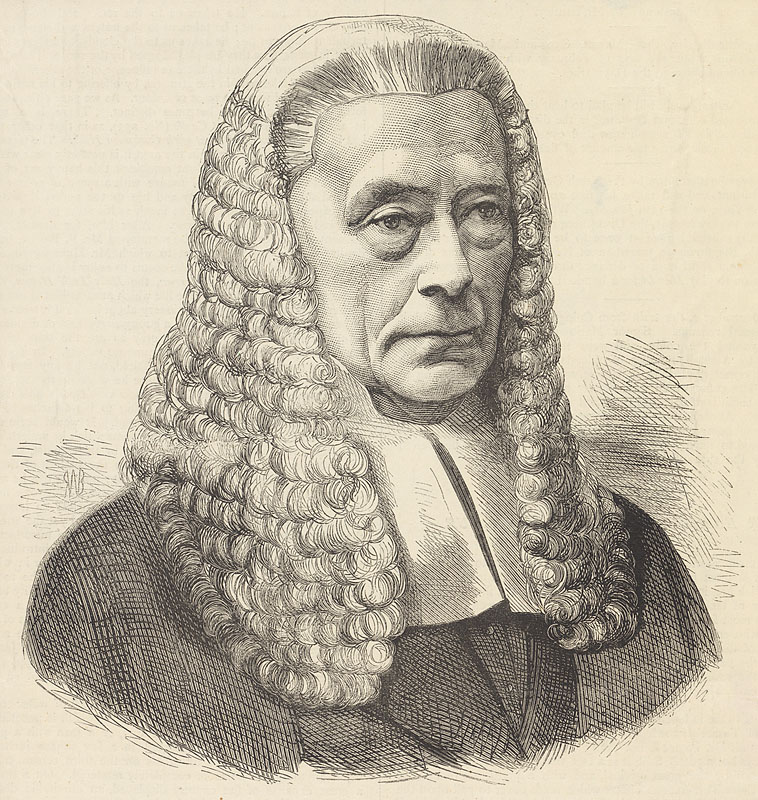
Justice Day

On Saturday 24th January, James gave Alice his wages from his work as a bottlemaker. She then went on a drunken carousal, leaving the baby, also James, in charge of her eldest child, who was aged just seven. When she returned home three days later, the baby was dead. A police officer who attended the property found him lying on a broken door supported by two boxes.  The body was in a filthy and emaciated condition. As she was arrested, Alice said: "If it had not been for drink and company, I would never have neglected my children."

An inquest returned a verdict that the child died from inflammation of the lungs caused by want of proper nutrition and general want of attention arising from gross neglect. Alice was committed to the Assize for trial on a coroner's warrant.

On 19th March, 32-year-old Alice appeared before Justice Day. Her eldest child gave evidence, saying that he had seen her in the street on the Sunday, but she would not come home. The baby, he said, died in his arms. A doctor said that Alice had taken James to him about two weeks before his death, and he warned her that if he died, he would not feel justified in issuing a death certificate. One witness called on Alice's behalf said that the baby was a delicate one, and she had always been kind to him.

The jury found Alice guilty of manslaughter. Prior to passing sentence, Justice Day said this was a shocking illustration of the consequences of drink and debauchery. She had failed to give attention to her baby and instead indulged in hideous drinking with low women. He then sentenced her to twelve months imprisonment with hard labour. 


Wednesday, 29 July 2026

Double Shooting Tragedy at Tuebrook

In 1925, an unhappy marriage ended in tragedy when the husband shot his wife dead and then turned the gun on himself. 

On 18th July that year, 49-year-old Thomas Albert and his 29-year-old wife Rose rented rooms at 47 Lisburn Lane in Tuebrook, for themselves and their ten-month-old baby son. The couple had met whilst lodging together in Kensington and had the child together only to separate. Rose issued a summons against Thomas for maintenance, but in February 1925 at a court hearing in Wrexham, where her family lived, magistrates suggested the couple marry. Against the advice of her solicitor, she agreed to do so, with Thomas also being somewhat reluctant. 

Thomas, from Derby was a veteran of the South African and 1st World Wars and worked as a wallpaper salesman. His employers described him as a good worker, who had hinted at an unhappy home life.  They were arguing before they even moved into their new home, when Rose told her husband she did not have the week's advance rent that had been promised to the landlord, William Richards. 

The noise from the couple's arguing was so bad that William told them their second week would be their last there. On 25th July, William was kept awake until midnight and heard Rose crying. At 7am the following morning, a Sunday, he heard the sound of two gunshots from their bedroom. The police were called, and when they entered, the bodies of Thomas and Rose were lying on the floor, while their son was sitting on the bed unharmed. 

An inquest heard evidence from Sarah Kidd, who had previously rented rooms to the couple. She told the Deputy Coroner, Mr Mills Roberts, that Rose had described her husband as a brute, but when they moved on they seemed happy and apologised for any trouble caused. A verdict of murder and suicide was returned. 


Monday, 25 May 2026

A Greek Tragedy in Scotland Road

In 1898, a Greek man living in Liverpool was found guilty but insane after he killed his wife by cutting her throat. 

Emmanuel Mavromatis, a 50 year old cotton porter originally from Greece, had settled in Liverpool in the 1870s. In 1898 he lived in Louis Street, off Scotland Road, with his wife Elizabeth, who he had been married to for fifteen years. Things were not going well, with his wife telling friends early in the year that she wanted to seek employment as a domestic servant and leave him.

Drawing of Mavromatis
in Liverpool Echo
On the morning of Sunday, 27th April, the couple's neighbour, Samuel Widdup, heard cries of "murder" from the property, then a deathly silence. He went to investigate and was met by another neighbour, Margaret Simpson, who had also heard the cries. She went inside and saw Mavromatis coming out of the kitchen, wiping his bloodied hands on a towel. He casually said to her, "I have killed my wife."

Margaret ran outside and told a man called Hercules Shalliday, who lived opposite, what Mavromatis had said. Hercules went in and saw Mavromatis pale and trembling. When asked what the matter was, he replied "I have killed my wife, she called me a liar, me can't help it all the while bother." He then pointed to the kitchen and  said, "She is in there." Hercules could see that Elizabeth was quite dead, her throat having been cut. 

A police constable was soon at the house, and Mavromatis pointed to the fire grate, where he had discarded the bloodied knife. He remained calm and rational as he was taken to the Bridewell in Cheapside. A postmortem found that the wound was eight inches long and three inches deep. Death was due to haemorrhage. She wa buried in a public grave at Anfield Cemetery.

Little over a week later, on 10th May, Mavromatis was on trial at the Liverpool Assizes. Samuel Widdup acknowledged that he had never previously heard the couple argue or seen them in drink. PC Davies said that as Mavromatis was being conveyed to the bridewell, he had said "She talked about breaking my neck every day."

The defence counsel, Mr Segar, described Mavromatis as a temperate and industrious man who had lived in perfect happiness with Elizabeth until the previous year. However, he suffered a head injury when a bale of cotton fell in him. This caused dizziness, and he was further injured when he fell into a cellar. The doctor who had treated him for concussion testified that he did not believe Mavromatis to be of sound mind. Dr. Wigglesworth of the Rainhill Asylum gave evidence of his examination of the prisoner at Walton gaol. In his opinion, he was suffering from delusions and not feigning it. He believed that Mavromatis knew what he was doing when he killed his wife, but did not think that he was doing wrong.

In addressing the jury in his summing up, the judge said that the question for them was whether Mavromatis knew if he was committing a criminal act. Without leaving their box, the jury returned a verdict of guilty but insane. Mavromatis was then detained at Her Majesty's pleasure. He died in 1918 at Rampton Criminal Lunatic Asylum in Nottinghamshire.

Genoa Tragedy for a Garstonian

In 1903, in the Italian port of Genoa, a Garston man who stood up to a fellow sailor who had a knife was stabbed and died from his wounds. 

On 6th May that year, the steamer Regnant left Garston for Swansea, where she took on a cargo of coal before sailing to Genoa. On 31st May, the crew were given shore leave, which was usual for a Sunday. Jack Davies, who was a fireman on the vessel, went to a bar with four of his colleagues and the donkeyman, a Greek who was only known by his Christian name of Antonio.

Entrance to the cemetery where Jack was buried

When a quarrel broke out between Antonio and one of the firemen, the Greek pulled out a knife. Jack attempted to calm things down, but the barman took a revolver from under the bar and threatened to shoot Antonio. This quelled the disturbance, and they all returned to the ship.

As the firemen were taking tea together, Antonio came out of his cabin and could be seen to be still in an excited state. All except Jack ran away, but when one of them shouted to him, "Jack, he has a knife", he replied, "Never mind; stand up like a man and face him." Initially, it looked like Antonio would walk past, but without warning, he gave Jack a backward lunge in the chest. Jack fell down, and Antonio then thrust the knife, which was hidden up his sleeve, into his heart and calmly walked off the ship.

The wound was bleeding profusely and within fifteen minutes, Jack had passed away. An Italian police officer, seeing blood on Antonio's hands and clothes, acted quickly and took him into custody. 

On 2nd June, Jack was buried in the English portion of the Monumental Cemetery of Staglieno, where a service was conducted by the chaplain of the English Mission. The second officer, Mr R.Jones, attended on behalf of the crew. 

When the Regnant arrived back in Garston on 24th June, there was a huge shock at the news of Jack's death. He was around 40 years old and well known locally, having spent much of his life at sea and also worked in the graving dock and shipbuilder's yard. He was a member of the Royal Naval Reserve, and a friend described him as "a quiet harmless little fellow and the best man who ever took up a shovel."


Saturday, 23 May 2026

Fatal Accident at a Shooting Gallery


When the proprietor of a shooting gallery was shot dead in 1904, no charges were brought against the man who pulled the trigger. 

On the evening of 12th March that year, Ernest Lacy attended a shooting saloon in Mill Street with two friends. The proprietor was 66-year-old Adolph Fleisher, who was originally from Leipzig in Germany and had moved to Liverpool in 1870. 

Lacy took two shots at a row of pipes, and as he was aiming for another, Adolph shouted, “Look out there.” Lacy fired at exactly the same time Adolph entered the line of fire. He fell instantly and was immediately attended to by his wife, Eliza. Lacy put the gun down and walked to the couple, but returned to his Menzies Street home after a few minutes, as Adolph was still alive. 

Adolph was taken to the Northern Hospital in Great Howard Street, where doctors were unable to extract a bullet that had lodged in his brain. He lingered in a semi-conscious state until 21st March when he passed away. Whilst Adolph was in hospital, police tried to trace Lacy without success.

On 24th March, Lacy read an account of Adolph’s death in a newspaper and he immediately handed himself in to the office of the Coroner, Mr T. E. Sampson. The inquest took place on the same day, and Lacy was able to state what had happened and also explain that he had been unaware of the seriousness of Adolph’s condition. Various other witnesses testified that Adolph stooped down as he walked in front of Lacy. This led to a verdict of death by misadventure. 

Monday, 25 March 2024

Portuguese Honeymoon Tragedy

In 1914 a newly married Portuguese couple's marriage ended in tragedy when the husband shot his wife dead on an ocean liner.  He was convicted of murder at Liverpool Assizes, but his death sentence was commuted to life imprisonment. 

At the end of 1913 Alberto Coelho, a 32 year old confectioner married his wife Josephine in Oporto. The couple then boarded the Deseado, a Royal Mail steamer sailing from Liverpool to Rio, where Alberto had business interests. At first, they seemed as happy as any other newlyweds would be, but on 7th February, two days into the voyage, Alberto shot Josephine twice while she was sitting in the vessel's social hall. She slipped under the table and died instantly.

Coelho pictured in the Liverpool
 Evening Express 31/3/1914

Coelho, showed no resistance as he was placed in irons. As the killing had taken place in international waters on board a British-owned vessel, he was subject to the law of its home country. On arrival in Rio, he was handed to the British consul before being placed in a local prison to await the return journey. His wife was buried at a service attended by most of the crew. 

On 31st March the Deseado arrived back at Liverpool and Coelho, who spoke no English, was charged with murder. He replied through an interpreter that he had intended to take his own life. He was removed straight to the Police Court in Dale Street, where he was remanded in custody. He was described as a swarthy well-built man with dark hair, a heavy dark moustache and wearing respectable clothing. 

On 9th April Coelho was back at the police court for a committal hearing. It emerged that the ship's surgeon Dr Segar had refused to attend, and give evidence. This led to summons being issued. A cello player in the ship's band described how Coelho had been talking to his wife amicably, then left briefly and came back with the pistol before shooting her dead. When Dr Segar arrived at court five days later, he said death was instant and a bullet had struck Josephine in the heart. Coelho was committed to the Assizes, reserving his defence.

Just ten days after the committal, Coelho was brought up before Justice Bray at St George's Hall. When the charge was read to him by the Clerk of the Court, Sir Herbert Stephens, Coelho replied firmly in English "Not Guilty". The defence did not dispute the facts of the case, but argued that Coelho was insane at the time of the killing. They pointed to there being no apparent motive or any signs of a disagreement. Coelho's brother described that he had acted irrationally the previous year, often wandering aimlessly through the streets of Rio, saying that he was being followed by a large dog. 

Doctors from Walton Gaol told the court that Coelho had appeared rational during interviews and showed no signs of insanity. Although Coelho's counsel pleaded that he had delusions and was not responsible for his actions at the time of the killing, the jury took half an hour to find him guilty of murder.

After Justice Bray had passed the death sentence it was interpreted to Coelho. He replied that he was not guilty and that Josephne had planned on committing him to an asylum on arrival in Rio. He then held his head in his hands before being taken down to the cells.

The verdict was quickly seized upon by the Portuguese media, who appealed to the British Government to show magnanimity and grant a pardon as it had been a crime committed in a fit of passion. Prime Minister Bernardino Machado was petitioned by the League for the Defence of the Rights of Man to pursue this. Demands were also made for the recall of Portugal's consul in Rio, who had handed Coelho to his British counterpart. 

On 11th May an appeal was heard at the Court of Criminal Appeal. Coelho's lawyers argued that the verdict was unreasonable and that Justice Bray had misdirected the jury. They also submitted that Coelho had never been to England and had no knowledge of English laws. These arguments were dismissed and the appeal judges concluded that the defence had failed to prove insanity, therefore the conviction could not be quashed. 

Coelho's execution was scheduled for 14th May. He was due to be hanged alongside Joseph Spooner, who had killed his daughter and admitted his guilt from the beginning. However, due to the petitions still being considered by the Home Secretary, it was deferred. Spooner's execution went ahead as planned and later that day, Coelho was notified that his sentence had been commuted to life imprisonment. By the end of that decade, he had been released and deported to Portugal.   


Saturday, 5 August 2023

A Terrible Tragedy In Everton

In 1898 an Everton man killed two of his children, attempted to kill another child and his wife then tried to commit suicide. He was found guilty but insane.

On the morning of 10th June that year in Village Grove, 33 year old refuse destructor Francis Murphy breakfasted with his wife Gertrude, telling her that he felt very low due to a bout of bronchitis. He refused to see a doctor and as she was preparing breakfast for their two daughters who were still in bed, he tied a cord around their two month old baby Bernard's neck. 

When challenged over what he was doing, Francis replied "That is finished, now for you". He then ran at Gertrude and cut her throat. Gertrude managed to grab the baby and run out of the house to a neighbouring property, where the cord was untied. The neighbour then came into the house and found the two daughters, six-year-old Annie and three-year-old Ellen, dead in their beds. Francis was sat in the water closet with a wound to his throat. 

Francis's domestic arrangements were complicated by Victorian standards. He had married in 1884 but his wife committed bigamy while he was away in America. He then had two daughters with another woman, who subsequently died. He married Gertrude in January 1898 when she was already pregnant with Bernard. 

At his trial on 1st August, it was acknowledged that Francis had been a loving husband and father, but for three weeks before the tragedy he had been in bad health. He had said to Gertrude that if he were to die they must die with him. Consideration was given to the suddenness of the violence, the fact as an eighteen year old Francis had suffered a skull fracture in an accident and that for a few weeks, he had been complaining of dizziness. There was also a history of insanity in his family and after hearing evidence from doctors at Walton gaol and the Rainhill asylum, a verdict of guilty but insane was returned. Mr Justice Ridley then ordered that Francis be detained as a criminal lunatic. 


Tuesday, 27 December 2022

Blades Knifed to Death

A man with the surname of Blades was stabbed to death in a fight in 1917. His killer was guilty of manslaughter and gaoled for just four months.

On the evening of  3rd September that year Richard Griffiths, a West Indian seaman and Alfred Blades, a second engineer on a dock dredger, began quarrelling over game of dice in a pub in Stanhope Street. They went outside to fight and as Blades got the upper hand, Griffiths pulled out a knife with the aim of fending him off. 

Instead of stabbing Blades in the hand as intended, the knife punctured the stomach and he died soon afterwards at the Southern Hospital in Caryl Street (pictured). Griffiths, who lodged in Park Lane, immediately confessed to the killing when he was arrested. 

Blades, whose brother also lived in Liverpool and worked as a dock labourer, was buried in a public grave in Allerton Cemetery. An inquest returned a verdict of wilful murder and Griffiths was remanded to await his trial.

At the Liverpool Assizes on 2nd November Griffiths, who was aged twenty, appeared before Justice Sankey. His offer to plead guilty to manslaughter was accepted by Crown prosecutors. In his sentencing remarks the judge said it was not one of the more serious cases of manslaughter, but passed comment on Griffiths's origin by saying "Coloured men must realise they are not at liberty to use knives in this country".

Tuesday, 29 November 2022

Homicide Charge in Venezuela

In 1927 a ship's captain from Liverpool spent a horrifying two months in a Venezuelan prison. He had been charged with homicide after his vessel collided with another, leading to the death of a crew member.  

On 7th April that year Percy Brining was in command of the Leyland liner Ninian, which was being escorted by a pilot into the port of Puerta Cabella. The Ninian collided with a smaller mooring boat, injuring three men. Brining was taken into custody with the matter initially expected to be settled by way of compensation. At first Brining was under house arrest at the residence of the British consul, however he was sent to a common prison five days later when one of the men, who had been struck by a propeller, died.  Although he was provided with furniture by the consulate, the stench was overwhelming and he regularly saw prisoners whipped or dragged along by chains attached to their feet. 

Fifty year old Brining had been with the Leyland Line for twenty four years, thirteen of them as a captain. Working with the Navigators and General Insurance Company, steps were taken to ensure he had the best possible defence. However it was feared he may be on remand for up to five years awaiting trial. Pressure to secure his release on bail was put on the Foreign Office by Liverpool's Lord Mayor Sir Frederick Charles Bowring, while the matter was also raised in the House of Commons. Six weeks after his arrest, his wife was worried sick at her home 14 Harlech Road, Blundellsands, having still not heard any direct news from him.

By the middle of June the Leyland Line's insurers had paid compensation of £240 to the widow of the deceased man. Brining was released back to the British consul's house to remain there until a decision had been made on any charges. Although prosecutors pressed ahead with the homicide case, at the beginning of July a judge did not take long to acquit Brining, allowing him to leave the country. His ordeal was finally over on 2nd August when he left for Europe on a French steamer. Much of the fifteen day voyage was spent receiving treatment for sores which had developed due to lack of clean air or exercise. Two weeks later he had a tearful reunion with his wife in St Nazaire. He told a Liverpool Echo reporter that he daren't use the exercise due to the number of 'cut throats' who walked there. 

On Saturday 20th August Brining finally arrived in Liverpool. His sense of duty meant he reported for work at his employer's James Street offices on the following Monday, where he was promptly given three months holiday to get over his ordeal. The Foreign Office continued to fight on his behalf, believing his ordeal was a dangerous precedent to other mercantile seamen. Two years later he was given £500 in compensation, after funds were received from the Venezuelan government 

Sunday, 17 July 2022

Mothers Tears in Dock

A mother who suffered a bout of insanity in 1932 killed her baby daughter by gas poisoning. She was charged with murder but found guilty but insane.

At 10pm on 17th February that year flour mill worker John William Adams, returned to his home in Rectory Street, Toxteth, which was off Beresford Road where Stonegate Drive is now. The house was in darkness but he was not initially concerned, assuming his wife Eliza had taken their seven month old daughter to see relatives.

John waited but after midnight passed he was so worried he forced entry to the house. On doing so he saw his wife's outdoor coat over a chair and the baby's milk bottle on a table. He rushed upstairs and found them both unconscious on the bed. A doctor was called who certified that Dorothy was dead after unsuccessfully trying artificial respiration. 

Eliza had begun to come around and was in a dazed condition, holding her head in her hands and moaning incoherently when police officers from the Essex Street bridewell arrived. A constable searching the bedroom smelt gas on the bedclothes and found a note that said "Dear Bill, please forgive me but this is the only way, Goodbye, Eliza." There was a gas tube in the room connected to a bracket, but no smell of gas in the room itself. Eliza was taken to Smithdown Road hospital for further observation. 

It was nearly a week before 25 year old Eliza was able to be discharged. When interviewed by the police and when told that Dorothy was dead she replied "No, no is my baby dead?" On being charged with murder and attempted suicide she admitted that she had tried to kill herself with coal gas. When Eliza appeared in the police court the Liverpool Echo reported that she was "a pitiful figure who sat with her head bowed and frequently wept silently." She had to be supported by two officers and after being remanded into custody, John was allowed to see her briefly. 

On 7th April Eliza appeared at the assizes. Smartly dressed in green, she was barely audible as she entered a not guilty plea. An aunt who lived next door testified that Eliza had always been a loving mother and that there was a history of insanity in the family. Dr W.A. Davies, assistant medical officer at the hospital said that her confused state on admission was not down to gas poisoning and commented "I believe that at the time she was not responsible for her actions and did not understand their nature." The medical superintendent, Dr Steele, confirmed he had certified her under the Lunacy Act.

After being found guilty but insane the judge ordered that Eliza be confined in  criminal lunatic asylum at His Majesty's pleasure. She had to be assisted to stand up, kept her hands over her eyes and was helped to the cells by two wardresses. Eliza was released from her institution by the end of the decade and was living with John at 5 Beresford Road. 

Friday, 22 April 2022

Backside Kick Means Lenient Sentence

When a man was convicted of manslaughter following a fight at Aintree, he was gaoled for just one month as he had only kicked the other party in the backside. 

On 14th November that year two boatmen, James Watkinson and James Aspinall, were engaged in carrying coals between Burscough and Liverpool along the Leeds & Liverpool Canal. At the Anchor Lock in Aintree, they got into a quarrel, which was a result of an old grudge. 

Thirty year old Watkinson punched Aspinall several times in the face and kicked him, causing him to fall own. Aspinall was taken to his home in Burscough on his son's boat, but died the following evening.  

Watkinson appeared at the Liverpool Assizes on 15th December. Medical evidence was heard that Aspinall had died from inflammation of the bowels, however this only 'might' have been caused as a result of the external injuries. 

After the jury found Watkinson guilty of manslaughter, witnesses were allowed to tell the court of him generally having a good tempered disposition.  The judge, Baron Bramwell, sentenced Watkinson to imprisonment with hard labour for just one month. However he warned nobody should be misled by this sentence. The reason for it, he said, was that he was satisfied Watkinson did not intend to kick Aspinall in any 'tender part' but instead give 'a kick of contempt on the buttock'. 

Thursday, 21 April 2022

New Born Baby in an Ashpit

A woman was charged with murder after the body of her new born son was found in an ashpit behind the public house where she worked. However she was convicted only of concealment of birth after the prosecution failed to prove the baby had been born alive. 

In the summer of 1858 Maria Smith became a servant for Charles Davies at the Jamaica Vaults, which now stands derelict at 330 Vauxhall Road. She provided a good character reference from her last employer and Charles had no idea that she was in what newspapers described as "the family way".

On the morning of 23rd November, Charles came downstairs and found Maria in a room next to the bar on her hands and knees, wiping away blood. Maria denied she had been abused by anybody and Charles ordered her to fetch Mrs Davies, then go to bed and rest. 

When Charles checked on Maria at 3pm she was no better and Dr Lambier was sent for. After carrying out an examination of her, Maria admitted she had given birth and directed the doctor to an ashpit, where the body of a male baby was found. It was brought into the parlour and laid out, with the doctor noticing there was bruising on the head.

An inquest heard evidence from Dr Lambier, who described the injuries and said  that they were in a location where there had been extravasation from brain. He believed the baby had been born alive. This led to a verdict of wilful murder and Maria's committal to the Assizes for trial. For the time being, she remained under police supervision in the Jamaica, as she was too ill to be removed. 

On 15th December, Maria appeared at St George's Hall before Mr Baron Bramwell. Despite the coroner's verdict, the prosecution could offer no evidence that the baby had been born alive. This meant that 23 year old Maria was relieved to have her plea of guilty to concealment of birth accepted. After what news reports described as "a suitable admonition", she was sentenced to one year's imprisonment. 


Wednesday, 20 April 2022

Doctor Guilty of Manslaughter

In 1901 a doctor living in Farnworth Street fought with a man he employed who later died from is injuries. He was found guilty of manslaughter but sentenced leniently.

On Tuesday 3rd December that year, 38 year old John Fleetwood Baines was dismissed from his role as a porter for Dr James William Ayres. The following Friday, he had two pints of beer in a Farnworth Street public house then went to see Ayres demanding money he said he was still owed. The sound of scuffling was heard and Ayres was then seen to put Baines out into the street before punching him, causing him to fall and hit his head on the kerb. Ayres then went back into his house and came back out with a bucket of water, throwing it over Baines and saying "Take that Jack".

Baines was helped up and taken to his sister's house by Richard Kelly, a painter who had been in the pub at the same time, asking for any stale beer that he could mix with varnish. His sister Agnes however didn't seek medical help, thinking his drowsiness over the next couple of days was the result of drink or medication. She did go and see Ayres, who told her he had only thrown water over her brother and he would do the same to her if she didn't go away. It was only when he coughed up blood on the Monday that she called for the parish doctor who immediately sent him to Mill Road Infirmary. Baines died on 15th December, leading to Ayres being charged with manslaughter.

At the Assizes trial the following February, Ayres pleaded not guilty. However Kelly, as well as three others, said they saw the blow being struck. One of these was Annie Nelson, who was on her way to her home in Exley Street, who said the sound of Baines's head hitting the ground made her feel faint. There was laughter when Ann Leghorne, who had been looking out of her window, was challenged by the defence over her angle of sight. She replied that she didn't see what a mangle had to do with it. 

In the closing statements, Ayres's defence counsel suggested that he was being convicted "principally on the evidence of a lot of women who differed in their statements." Baines was dismissed as a habitual drunkard that was barred from some local pubs, who had gone to see Ayres solely to start a row. Any blow, it was contested, was merely struck in self defence. Attention was also drawn to his sister not calling a doctor for four days and it was suggested that the fractured skull could have been a result of Baines falling from the couch on which he had been sleeping.

Summing up, Mr Justice Bucknill said that the key point was whether Ayres struck a blow with the intention of causing harm, or in self defence. He told the jury to disregard the character and drunken habits of Baines and focus solely on the actions and motivation of Ayres. Referring to Baines's sister as neglectful, he also advised the jury that she was not on trial and this had to be taken out of their considerations. 

The jury deliberated for 45 minutes and returned a verdict of 'guilty under great provocation'. In passing a sentence of four months, the judge said he was 'pained beyond expression' to do so to a man of his profession, but there was only one law of the land and it affected all persons alike. Ayres, who had already spent ten weeks in custody, was allowed to see his wife before being taken down to the cells. 


Sunday, 6 March 2022

Friday 13th Boarding House Drama

It was a bad Friday 13th for two Scandinavian sailors in 1929 when they fought, leading to the death of one and the other being charged with manslaughter.  

On Friday 13th September that year, fifty year old Norwegian Alfred Nyberg, a fireman on board an Elder Dempster liner, arrived in Liverpool and took lodgings in Upper Pitt Street. That night there was a party in the house, at which gramophone records were played along with singing. 

Most of those present went to bed at 2am but Nyberg then got into an argument with thirty year old Swedish fireman Perly Petersen, who had been in Liverpool for a week. Petersen struck Nyberg who fell, cutting his head. Other boarders rushed Nyberg to the Southern Hospital but he was pronounced dead on arrival. Petersen found a policeman in Great George Square and told the office he had acted in self defence.

When he appeared before magistrates the following morning charged with manslaughter, Petersen was granted bail on sureties of £25. A week later, Petersen was back before the court for a committal hearing. He said that he had objected to Nyberg removing food from the pantry without permission and a quarrel ensued, during which the Norwegian had scratched his face. With no witnesses to the incident, and it being acknowledged Nyberg was in poor health anyway, it was determined there was no case to answer. Petersen sobbed bitterly as he was released from the dock to waiting friends.  


Saturday, 26 February 2022

A Warning to Drunkards

When a man killed his brother with an iron scraper following a drunken argument, he was found guilty of manslaugther. Despite his remorse the judge showed no leniency and sentenced him to fifteen years in gaol. 

On 9th September that year two brothers who worked as ship scrapers, John and William Birmingham, argued over money at the court where they both lived in Chadwick Street, Vauxhall. They had both been drinking and William claimed that John owed him a small sum, but he denied all knowledge of it. 

They exchanged blows but 36 year old John then went inside and came back out with an iron scraper. A neighbour wrestled it from him John as he tried to strike William but he went back in and found another one. This time John laid a violent blow just above William's right eye and he fell down immediately. He was rushed to hospital and John was arrested and charge with assault.

The following morning at the police court John was remanded for a week. He said to the bench "I am sorry it was all over half a crown". William's skull had been fractured and he lingered in the Northern Hospital until 17th September when he passed away, aged 26. He was buried in a paupers grave at Ford Cemetery.

John was further remanded pending the inquest, responding with "I'd as soon see myself dead as my brother." Before the coroner Clarke Aspinall, medical evidence was heard that death was directly as a result of he injury inflicted and a verdict of wilful murder was returned. 

When John was brought back to court for  committal hearing, he cried throughout the proceedings. William's widow Sarah refused to testify against John, saying they had always been the best of friends and this was the first time they had ever fought. In committing John to the Assizes, the Stipendiary Magistrate Mr Raffles said "This is a very lamentable affair that would have never occurred but for that cursed drink which brought ruin and misery to thousands."

At the assizes on 21st December prosecutors described it as a painful case. It was accepted that John expressed immediate regret for what happened and that he had accompanied his brother to hospital, making no attempt to escape. The jury found him guilty of the lesser charge of manslaughter. 

In being asked if he had anything to say before sentencing, John cried bitterly and replied that he was very sorry it happened. The judge was having no sympathy however. Describing it as a most aggravated case, Sir George Hayes said he had to send a warning to drunkards and imposed a sentence of fifteen years imprisonment. John was in total shock as he was removed from the dock.

Tuesday, 8 February 2022

Killing Over a Shilling

In 1868 a man borrowed 4d to make a part payment of a shilling debt he owed to a friend. When challenged over the reason he borrowed the money, he stabbed his friend to death and was gaoled for twelve years after being found guilty of manslaughter. 

At 5.45pm on Tuesday 27th October that year three friends - Edward Donovan, Richard Corbitt and  William Braithwaite, were walking down London Road when a complete stranger brushed against Braithwaite, much to his annoyance. Donovan was amused by this and some words were exchanged between them, but they soon made up and all three went to Corbitt's house in Thurlow Street, off Richmond Row. 

On arrival, Braithwaite asked to borrow 4d from Corbitt. Donovan immediately asked for that money as part payment of a shilling debt he was owed by Braithwaite, who complied. An argument then broke out in the back yard between Corbitt and Braithwaite, who was now quite drunk. This led to Donovan fetching Corbitt's wife to call her husband away. He then went inside to her, but as Braithwaite left the house he stabbed Donovan just below the breast. 

Donovan ran a few yards before falling down. Two police officers who were in Christian Street were summonsed to the scene and they found him in a dying state. The 22 year old was pronounced dead by a doctor who arrived shortly afterwards. On being told that Braithwaite lived in Portland Street, two officers went there and took him into custody. Braithwaite had by then sobered up a little but replied that he knew nothing about any death.

At the inquest Corbitt was in the unenviable position of giving evidence that would incriminate one of his friends in the death of another. He said that they had spent the afternoon drinking and Brathwaite was in a far worse state than Donovan. Describing the incident when a man brushed against Braithwaite, he told the coroner that his friend had shouted after the man and Donovan was amused at this calling him a 'drunken tailor'. Corbitt had told Braithwaite it was wrong to borrow money from him to pay back Donovan, leading to him becoming more agitated. 

Of the fatal blow, Corbitt admitted seeing Braithwaite strike Donovan but did not know he used a weapon. He did recall however that whilst they were out drinking, Brathwaite had used a small knife to cut some cheese. Corbitt's wife Martha gave more damning evidence, saying she had seen Braithwaite open a knife just before Donovan was struck. A youth named John Davies, who was walking past and knew none of the men, said he saw Brathwaite rush at Donovan without provocation. The doctor who carried out the post mortem reported that Donovan's organs were healthy and the blow was made with such violent force that the knife had passed through an eighth inch of bone before cutting the vein.

Braithwaite, a 24 year old tailor, appeared at the Liverpool Assizes on 21st December. The only decision for the jury to make was whether it was a case of murder or manslaughter. Due to the killing having taken place in a moment of passion, he was found guilty of the lesser charge. However Justice Hayes referred to it as a most aggravated case, especially in respect of Braithwaite opening the knife. Commenting that drunkenness was no excuse, he imposed a sentence of twelve years penal servitude. 


Wednesday, 2 February 2022

Walton Butcher Acquitted

In 1885, a Walton butcher was charged with manslaughter after a customer he had chased out of his shop died. However, when the case was tried, he was found guilty after the jury concluded that death was a result of a fall rather than being struck.

On Saturday, 18th July that year 64 year old John Williams went to work at 5.15am as a labourer on the Lancashire & Yorkshire Railway. He then spent the early afternoon drinking in the Prince Leopold pub in Rice Lane. 

Around 3pm, John went to buy half a pound of steak from butcher Samuel Hockenhull's shop. John complained about the quality of the meat and was ordered out by Hockenhull, but as he was leaving, he picked up a large knife and threw it towards the counter.

Hockenhull ran out of the shop and caught up with John at the corner of Wellfield Road. Within seconds, John was on the floor with blood pouring out of a head woun,d with Hockenhull trying to raise him back up. John was taken to his lodgings in Salisbury Road and died on the Sunday evening without ever regaining consciousness.

At an inquest, Hockenhull's assistant, Andrew Hancock, described how filthy language had upset ladies who were present. He stated that John said he would go for his boss and then threw the knife. In respect of what happened on the corner with Wellfield Road, he said that Hockenhull grabbed John by the collar, and he immediately fell over. A woman standing on the other side of the road said she saw Hockenhull hit John, but her friend could only say it was a push and that she didn't actually see him fall. 

After an inquest verdict of manslaughter, Hockenhull was committed for trial on a coroner's warrant but granted bail. The case was heard before Mr Justice Manisty on 4th August. In addition to conflicting evidence from witnesses as to whether John was pushed or fell, medical reports stated that although the cause of death was a ruptured blood vessel, there was no skull fracture. John had not struck the ground with considerable force. This led to a not guilty verdict and Hockenhull was released from the dock.