Showing posts with label suffocated. Show all posts

Monday, 2 May 2016

Dead Girl in a Water Closet


When a girl was found dead in mysterious circumstances in the early 1890s it was first through she had been murdered, but lack of evidence led to the coroner's court returning a verdict of suffocation. 

Hopwood Street (www.liverpoolpicturebook.com)
At around 11pm on Tuesday 2nd August 1892 Margaret Eaton went to the water closet at the back of her house in Hopwood Street and was horrified to find the body of a young girl there. Her head was in the water and Margaret called her husband to life the body out, but a doctor in Athol Street declared life extinct.

A post mortem concluded that the cause of death was suffocation but there were no marks of violence on the body. The girl had long blond curly hair and was well dressed and not undernourished. After the body was taken to the mortuary at Princes Dock, dock labourer James Concannon and his wife Louisa, whose three year old daughter had gone missing from Newsham Street around 330pm, were informed. The couple went to the mortuary and confirmed that the little girl was that of their three years and eight month old daughter Ann.

Mrs Concannon told police that a pair of nine carat gold earrings and new pair of boots were missing from the body and it was supposed that Ann had been killed after a robbery. An examination of the stomach contents found that she had eaten pickled onions something her parents insisted had not been provided by them. An inquest was opened on 5th August but immediately adjourned due to the police having had very leads available to them.

Enquiries at pawn shops found no trace of the missing items and when the inquest resumed on 17th August, police were unable to offer any further evidence. Two doctors who had examined the body said there were no marks of violence and it was suggested by the coroner that perhaps Ann had gone into the closet to escape a robber and fell into the position which she was found. With no evidence to suggest who may have placed Ann in the closet, the only verdict the jury could return was one of suffocation.

Tuesday, 1 September 2015

Baby Sent as Luggage Dies

A mother who inexplicably posted her sleeping baby in a box to Liverpool was arrested and charged with murder, but eventually sentenced to just six months in prison.

On Saturday 6th March 1858 Jane Parker called at the house of Elizabeth Eaves in Ormskirk Road, Preston, saying she needed help as she had gone into labour. The following day she gave birth to a baby boy which was perfectly healthy and Mrs Eaves allowed her to stay for a bit longer.  On the Tuesday 33 year old Parker paid Elizabeth for some frocks she had made for the baby, then left saying she was returning to a farm where she had employment. 

Parker instead went to a furniture brokers in Friargate and bought a box, asking the broker to address the box to a Mrs Eldon at 6 Harrison Street off Scotland Road. That afternoon, Parker placed the baby in the box after first having given it some gin to make it sleep. She then went to the Hoop and Crown Inn and gave a labourer named Henry Hall 3d to take the locked box to the parcels office at the railway station and dispatch it to Liverpool. Only then did she go to the farm where she worked, which was in fact owned by her parents in Much Hoole.

A few hours later a van driver called at 6 Harrison Street with the box, but a Mrs Regan who lived there said she knew nothing about it, but there was a Mrs Melville who lived nearby and perhaps there had been some confusion. The following morning, after being told of the attempted delivery, an intrigued Mrs Melville went to the parcel office at Lime Street. After the shock of discovering its contents were a dead baby, she was then taken into custody whilst further inquiries were made. 

With Henry Hall being traced as the sender of the box, he gave what information he could in respect of having been given it by a young woman. When the Much Hoole policeman noticed that Parker had returned to her parent's home without any baby having clearly been pregnant the week before, he decided to knock and see what she had to say. When Parker answered the door at 5pm on Friday 12th March and saw a policeman standing there, she ran to a cupboard and took out a bottle of laudanum, but the officer was able to prevent her drinking it. 

Parker was arrested and placed in the Preston Bridewell and at first she denied having even given birth. Hall was then taken to identify her and when a medical examination was ordered she confessed to her actions and claimed that a traveller had told her a child could survive in the box for two days. Asked about her reasoning for addressing the box the way she had, she could not give a satisfactory answer, saying only that she knew there was an Eldon Street in Liverpool. This information was then sent to the Liverpool police, who were now satisfied that Mrs Melville had just been extremely unlucky and had nothing to do with the affair, meaning she was released from custody.

On 16th March an inquest was held before the Borough Coroner Mr P F Curry. He praised the vigilance of Detective Caryle from Liverpool and the efforts of the Head Constable at Preston for 'bringing a great mass of evidence into one unbroken chain, link by link, one end resting upon the body of the child and the other under the control of this woman calling herself Jane Parker.' Saying that as it was not clear who the box was meant for, nor how long it would be before it was opened, he concluded that the destruction of life was certain once she had put the baby into the box. The jury returned a verdict of wilful murder against Parker, who was unable to be present as she was seriously ill with a heavy cold brought about by her long walk in the snow so soon after giving birth. 

Parker appeared before Baron Martin on 29th March, where the prosecution allowed her to plead guilty to manslaughter rather than try her for wilful murder. She was then sentenced to just six months imprisonment with hard labour.

Thursday, 6 August 2015

Tragic Killing of a Granddaughter

A man who took his granddaughter for a walk and killed her was detained in a lunatic asylum after he was found to be not responsible for his actions.

In 1880 retired Irish born seaman Richard Maguire lived at Howe Street in Bootle with his daughter, her husband and granddaughter Catherine, who was two months short of her second birthday. He was very fond of Catherine and used to love taking her out on walks, but it was on one of these where he had an episode that led to him causing her death.

When 62 year old Maguire got up on the morning of Saturday 3rd January that year he told his daughter and Thomas that they had better look after Catherine, as he had dreamt he was going to kill her. They took no notice of this and at midday he took her out and didn't return until the next morning.

When he got to Howe Street the next morning  he was wet and wild looking and Catherine's parents were frantic with worry. When his daughter asked where she was, Maguire replied 'IN HEAVEN I HOPE' and said that a fair haired woman had taken her off him but he would go back to try and find her. After a sleep Maguire was again challenged over Catherine's whereabouts and said he was sat on a step and his deceased wife had taken her off him, with the girl saying 'TA GRAN.'

Maguire was taken into custody and told the police they would never find her. However she was found lying face down in a ditch on the morning of 6th January. A post mortem found that she had been suffocated. When Maguire was charged with murder he tried to put his head in a water closet as he was returning to his cell.

At the inquest at the Crosby Hotel on 8th January Maguire's son in law Thomas Kiernan explained that they had always had good relations and he was trusting of Maguire with Catherine. This was despite him having spent three months at the Haydock asylum before Christmas, with Kiernan believing Maguire was a bit weak minded but nothing else. When Maguire was asked if he had questions, he could only reply that he loved Catherine as if she was his daughter.

Other witnesses gave accounts of Maguire's movements on the fateful day, which had been quite extensive. One man had seen him in Sefton and Catherine was crying, Maguire replying that her mother's head was burnt. A man who had seen them in Crosby Village at 6pm asked how Catherine was so wet and Maguire replied that she had fallen into the canal. By 8pm Maguire seemed to be heading in the direction of Bootle but was alone and acting very erratically, telling a coachman that he had been conducting a christening but an unknown female had taken the child away.

A verdict of wilful murder was returned and Maguire was committed for trial at the next Liverpool assizes,
appearing before Lord Chief Justice Coleridge on 10th February. Dr Barr of Kirkdale gaol said he was of the opinion that Maguire was of unsound mind and when further historical details were given the judge stopped the case. The jury was ordered to find Maguire of unsound mind and he was sent to Broadmoor Criminal Lunatic Asylum.

Sunday, 5 July 2015

Starved Child Not Murdered

A mother who was charged with the murder of her child after it died from starvation was acquitted after the trail judge ruled that there was insufficient evidence to suggest she had wilfully withheld food to cause the death.

On the 12th January 1888 Sarah Boadle gave birth to a baby boy at her home in Curate Road, Anfield. She was attended to by a nurse named Mary Hickman but gave her name as Mrs Hartley, the same surname as a man she was residing with. She named the baby boy Maurice and he seemed to be in perfect health, weighing seven or eight pounds.

A few days after the birth Mary visited to see how things were going and she was heard to say to Hartley 'I dare not do it.' When challenged over this, Sarah said that he had asked her to smother the baby, promising to marry her if she could get rid of it and that she had tried everything she could to abort the pregnancy. She then reassured Mary that now the child had been born, there was no way she would endanger it.

On 23rd February Sarah went to Dr Holmes's surgery in Oakfield Road and said that the baby was dead, leading to him asking why she had not informed him of any illness beforehand. She replied that she didn't want to aggravate any medical condition by taking him outside and she had nobody to send to the doctor.

Dr Holmes refused to issue a death certificate and a post mortem was carried out by Dr Pitt of Tuebrook. He found that the weight hadn't increased since the birth and that the lungs were congested. The stomach and bowels were empty and he felt the cause of death could have been starvation, but suffocation was another possibility due to the lung congestion.
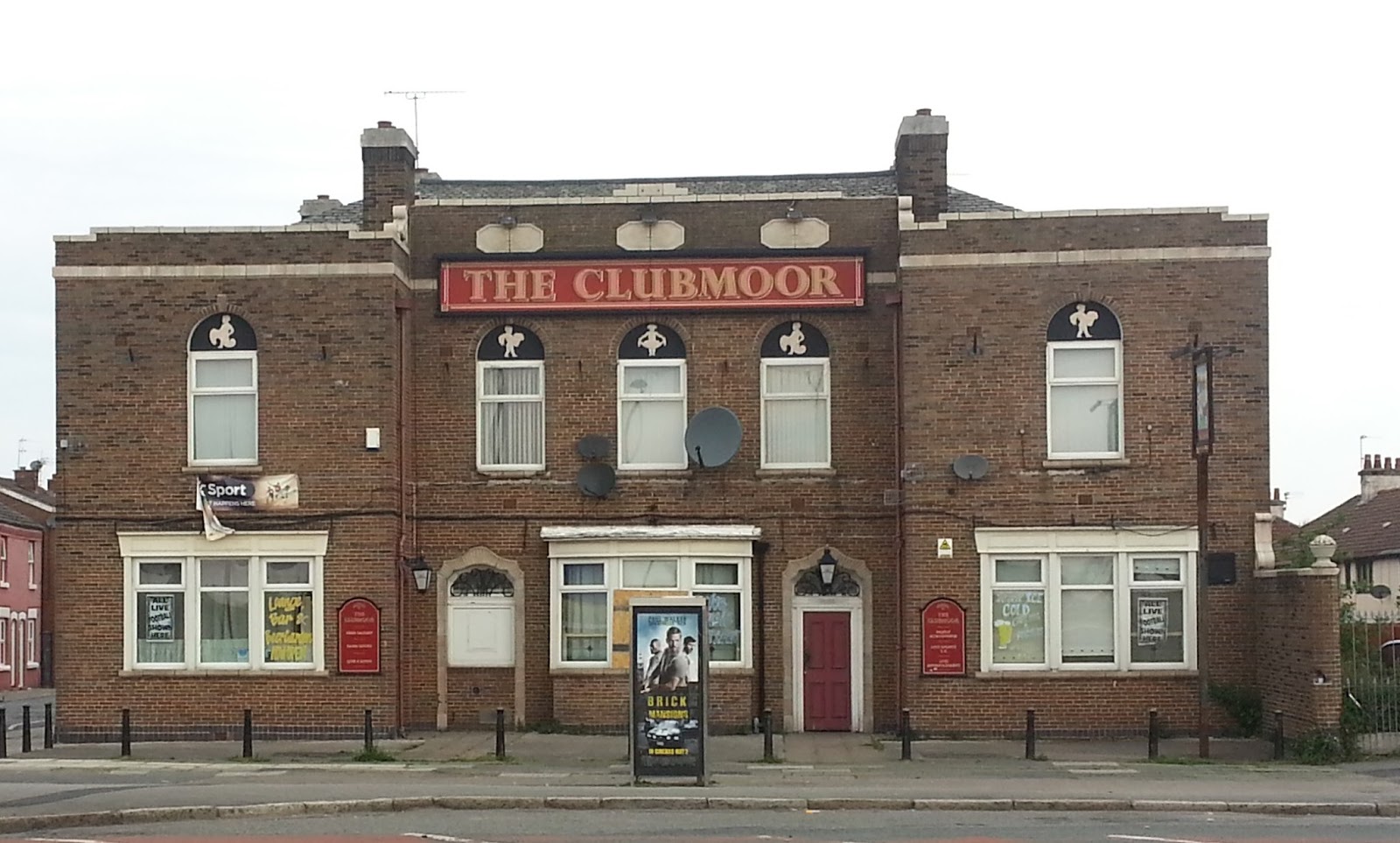
The inquest was held at the Clubmoor Hotel on 27th February. The following day's Liverpool Mercury said that Sarah was of 'very respectable appearance' and had swooned whilst listening to the proceedings and had to be helped back up. 'Hartley' was present and it came to light that his name was actually Eugene Auzon. After the coroner Mr Brighhouse had summed up and drawn attention to Hartley/Auzon's role, the jury found that Sarah had killed Maurice through neglect, while Auzon was an accessory after the fact.

On 17th March both appeared before Mr Justice Grantham at the assizes. The first witness was Mary Hickman, who agreed under cross examination that the couple had severe cash flow issues and had pawned nearly everything to buy food. Neighbours said that Sarah was very fond of her baby. With medical witnesses being unable to agree on the exact cause of death the judge summed up by saying that although it was a suspicious case the evidence did not point to food being wilfully kept from the child. On this basis the jury returned a verdict of not guilty and both prisoners were discharged.

Thursday, 21 May 2015

The Bootle Smothering Murder

Two domestic servants who smothered an elderly woman to death with a pillow were reprieved from the death penalty with just a few days to spare.

On the night of 8th October 1902 Eliza Hamilton was working as a charwoman at the Oriel Road home of 71 year old spinster Elizabeth Marsden, sleeping over as part of her duties. In the early hours of the morning though she ran to her father's home in Clifford Street saying that two women had broken in and smothered Elizabeth with some pillows. 

A woman named Miss Kershaw, who lodged with the Hamiltons and also worked for Elizabeth, sent for the police. Officers attended the old lady's's home and found that she was dead and had three pillows and a bonnet box over her face. Hamilton was then questioned further and the 19 year old was arrested herself for being in possession of some of Elizabeth's clothing.

Hamilton then confessed to having involvement in the killing and was charged with wilful murder. There were concerns about her mental health though as her mother was in an asylum and Hamilton herself was acting eccentrically. She was advised by lawyers though to make no formal plea in court until the inquest had took place and others found.  When the inquest was opened and adjourned Hamilton repeated the story about two unknown females having been in the house and that she had first found them in the kitchen.

A month later two the two other females were finally apprehended in Beaufort Street in Toxteth after they had tried to pawn a watch belonging to Elizabeth. They were Eva Eastwood and Ethel Rawlinson, aged 17 and 20 respectively and who had both worked for Elizabeth and were originally from Workington. At the resumed inquest evidence was heard that they had told friends about planning to rob or poison Elizabeth, while Hamilton was said to have confessed to killing her after being rebuked. The coroner's jury found all three guilty of wilful murder and they were committed for trial at the next assizes.

The trial, which lasted two days, began on Friday 12th December but Hamilton was immediately discharged from the dock having agreed to turn King's evidence. She told how she had heard groans from Eliza's room and when she went in there both women were sat on the bed. They gave her  a florin and parcel and all three left together. Two local women said how Rawlinson had bragged that a women had a wardrobe full of gold and should be robbed, while medical evidence confirmed death was caused by slow suffocation.

On the second day it was shown that property belonging to Elizabeth was found in the women's possession. Both tried to say that Hamilton was involved, which went against what they had told the police on arrest. When Justice Jelf heard that Hamilton was kept up all night at Bootle police station he was very critical, describing it as a cruel system and that the sooner it ended the better.


One of the crucial pieces of evidence was the apparent confessions on arrest, with Inspector Dixon telling the court that Rawlinson had said to him 'The old bitch starved me when I was with her, I said I would do it and I have done it.' The defence counsel submitted that a manslaughter verdict was more appropriate but the judge indicated this was a case of murder or nothing. The jury took half an hour to find both women guilty with a strong recommendation for mercy on account of their gender, young age and previous good character.

Prior to passing the death sentence the judge said that the verdict could not be in the slightest doubt and was 'just and right.' After hearing her fate, Rawlinson shrieked and fell backwards, having to be helped back up by a wardress. She was then carried to the cells crying 'Oh mother mother' as the tears streamed down her face. Eastwood retained more self control, sobbing into her handkerchief but giving a look of defiance as she turned to be led from the dock. Many in the public gallery were moved to tears by the scene.


Whilst awaiting her fate in the condemned cell Eastwood's mother, who was assumed to be dead, came to visit her. She blamed herself for her daughter's predicament, saying it was her alcoholism that led to her children being taken away from her. Then on Christmas Eve, just a week before the execution date, communication was received from the Home Secretary that a reprieve had been granted and both women had their sentences commuted to life imprisonment.