Showing posts with label Justice Grantham. Show all posts

Sunday, 27 September 2020

Family Killing After a Wedding

A man who stabbed his brother in law to death after having too much drink at a wedding received  a light sentence due the provocation received. 

On the afternoon of 21st November 1892 eighteen year old Thomas King attended a wedding along with his brother-in-law, Thomas McDermott. Afterwards they spent the afternoon drinking at the house of the bridegroom, who had been loaned a suit to get married in by McDermott. 

King and McDermott then went to a pub in Boundary Street. When 29 year old McDermott commented that he was the better man  an argument broke out and they were both asked to leave by the landlord.

Both men returned to the house in Luton Street where they lived with Catherine, who was McDermott's wife and King' sister, as well as Catherine and King's father and grandmother. King entered the house first but was quickly followed by McDermott who was aggressive and took off his belt and coat. He said he would beat King and his brother Peter in retaliation for Peter hitting Catherine while McDermott, a ships donkeyman, had been away at sea. 

McDermott managed to restrain her husband and told him to stay locked in the parlour while she made him some tea. King then left the house, but was followed by McDermott who escaped through a window. Catherine caught up with McDermott in Boundary Street but he refused to return home with her.

About 7.30pm a boy knocked at Catherine's door and told her that her husband was on the floor in Boundary Street. She ran there and a crowd had gathered around. One woman was trying to stop the bleeding from a wound with an apron and although still alive, he was not responding to any questions. Catherine was told he had been stabbed but her brother was nowhere to be seen. A police constable and horse ambulance arrived and McDermott was taken unconscious to the Northern Hospital, but Catherine was not allowed to go with him.

As the constable was leaving the Northern Hospital an hour later he was approached by King, who admitted being responsible for the death. He stated that he had been cutting some tobacco with a knife and McDermott ran at him as if to carry out a headbutt, only to hit the knife. King was taken into the hospital where he was allowed to hold McDermott's hand and apologise. He was then taken to the bridewell.  

McDermott later that evening, having suffered two puncture wounds to the abdomen. Catherine was only advised of her husbands death when she attended the hospital to enquire about his condition. King was remanded in custody and an inquest was opened on the Thursday morning where Catherine tearfully described what had happened in the house. 

It emerged from six other witnesses present that King had gone back to the same public house, followed by McDermott who began to threaten him again before both men went outside into the street. Nobody seemed able to say who threw the first punches, but one female with two black eyes said she had been punched twice by King as he made his escape. However Catherine Furling, a servant at the pub, said she was not working that night but had seen what happened outside from her bedroom window. She describe how McDermott had twice punched King and once headbutted him, and corroborated King's claim that McDermott ran at him as he held a knife in his hand.

In summing up, the Coroner stated that all six witnesses from the pub were friends of McDermott but that Miss Furlong was not interested in either party. He said the jury should return a verdict of manslaughter at most, and it was certainly not wilful murder. They did so and King was committed for asssize trial.

King, a ships trimmer, appeared before Mr Justice Grantham on 14th December. He was found guilty of manslaughter but with a recommendation for mercy on the grounds of the great provocation that occurred. In sentencing King to four months imprisonment with hard labour, the judge condemned the 'use of the knife and free indulgence in drink'

Sunday, 19 June 2016

Woolton Pub Killing

In 1891 a horrific killing took place in Woolton when a pub landlord died after a brutal assault by two customers who he had barred from the premises.

On 2nd April 1891 two labourers named Michael Gallagher and Bernard McKeon entered the Coffee House hotel in Woolton Street and settled down in the smokeroom for some drinks. They had to be asked by the barmaid Alice Frere to tone their language down but they didn't do so. When they went to the bar for more drinks the 66 year old  landlord, William Toulmin, told them that they had had enough. They repeated their request but were again denied service and began arguing amongst themselves, leading to Toulmin telling them to go outside if they were going to fight.

Gallagher and Mckeon went into the yard for about five minutes and they were seen to be laughing together. On going back inside Toulmin again refused to serve them and said they would be better off going home for some tea. The two men said they would do this if they could have another beer each, but Toulmin said he wouldn't let them have any more even if they paid him a shilling.

As the men began to get boisterous again the barmaid ran into the yard fearing for her safety. Toulmin decided enough was enough and went to push them away from the bar, leading to a glass being picked up and smashed against his head. The cook Kathleen Kavanagh came to see what was going on and saw one of the men wielding a belt. She ran off for help and on coming back saw Toulmin sat on a chair and three bloodstained glasses on the floor next to him. The barmaid returned inside and saw Toulmin covered in blood and being treated by Kavanagh. She then ran outside screaming leading to a Mr and Mrs Hall coming in and offering assistance.

The whole incident had been witnessed by a beer salesman from Burton on Trent named Mr Doubleday. He tried to leave the pub to go to the police but was stopped by Gallagher, only to be let out in return for a payment of 6d. After Doubleday notified the police an officer arrested the two men on a charge of unlawful wounding.

Toulmin's regular physician Dr Joll arrived and stemmed the bleeding. Toulmin was conscious but dazed and helped to bed but two days later he became delirious. Although he could occasionally talk rationally he deteriorated and died on the afternoon of 8th April.

An inquest took place on 10th April at the Woolton courthouse before the county coroner, Mr W T Husband. Crowds lined the streets hoping to get a glimpse of the proceedings, where the police case was presented by Superintendent Barker from Prescot.

The victim's son Whitfield Toulmin, who sold beer from the Cobden Vaults, told the coroner that his father had ran the Coffee House for sixteen years. The barmaid and cook could say that they saw violence inflicted but not be sure who struck what blow. Mr Doubleday was the best witness and he could testify that Gallagher struck Toulmin with the buckle end of a belt. He then went on to say that after Toulmin had cleared glass from the bar, Gallagher picked some of it up and struck him again. McKeon's involvement he stated was inflicting two blows with a glass, while four other men remained in the smokeroom and did not play any part in the matter.

Dr Joll estimated that Toulmin had lost two pints of blood  and believed that if he hadn't arrived when he did then death would have occurred that afternoon. He explained that on conducting a postmortem meningitis had set in and that Toulmin had died from 'a train of symptoms arising from the wounds on the head'. The jury returned a verdict of wilful murder after some guidance from the Coroner, who had to explain to them that if the men set out intending to maliciously wound Toulmin then that was the verdict, irrespective of whether there was an intent to kill.

After the inquest Gallagher and McKeon were taken to Prescot where they appeared before a magistrate the following morning. As Doubleday gave his evidence McKeon interrupted and said 'I cant stand here while my life is sworn away'. Gallagher then stood up and said 'Get out of that box, I wonder how you can stand there and tell all these lies'. A fifteen year old girl called Rose Bushell, who hadn't given evidence at the inquest, stated that she lived opposite the Coffee house and had seen both men coming out of the pub putting their belts back on. The solicitor for the two defendants opted not to make any comment and said their defence would be reserved until the assizes trial.

Toulmin's funeral took place at Anfield cemetery on the same day as the police court proceedings. It was conducted by the Reverend Isaac Holmes and the oak coffin was adorned with several wreaths.

At the assizes on 6th May the two men were tried in front of Mr Justice Grantham. The prosecutor opened by saying that Woolton was a 'quiet little place' and that Toulmin was a man of 'considerable means' who had never abused his position. Whitfield Toulmin was challenged over his father's health but said he was not delicate and although he enjoyed a glass of beer, he never got drunk. Alice Frere admitted that the defendants were not drunk but said they had been too noisy which is why they were not served. Mr Doubleday was again a good witness, making it clear that Toulmin hadn't used violence and that at no stage did the men complain about his conduct.

The prisoners' defence was that they had not struck Toulmin and any injuries were as a result of him having fallen on to broken glass. Their counsel also reminded the jury that there had been no ill feeling between them men prior to that day and that they had not tried to escape from the scene. Patrick Gallagher's brother was then called to say that Toulmin had thrown glasses at the two men and also hit one of them. Two labourers took the stand to say Toulmin had struck Gallagher and McKeon.

In summing up the judge  said that publicans were in a dangerous position and that Toulmin died doing his duty. After fifteen minutes deliberation the jury returned a verdict of guilty of manslaughter, adding that they could give no credence to the claims of the defence witnesses whatsoever. Prior to passing sentence Justice Grantham said that the prisoners should be grateful that the jury had been merciful. He told them that he had considered sentencing them to twenty years penal servitude, but had decided to reduce this to ten on account of there having been no prior bad feeling between those concerned.


Monday, 7 March 2016

Killing of an Army Pensioner

When a Victorian army pensioner died from his injuries after being kicked at his home the man responsible was sentenced to only six months imprisonment. 

In the late summer of 1892 Thomas Manning, who lived in a court off Bevington Street and worked as a dock labourer, received a pension payout from the army. Rather than save it, the sixty year old instead set about on numerous drinking sprees.


On the evening of 2nd October that year a twenty two year old labourer named Thomas Heeney knocked at Manning's door and was let in by his daughter, who knew they had previously been on good terms. Without any apparent provocation Heeney punched Manning in both eyes and after he fell down, kicked him in the knees and groin before making off. 

Two days later Manning was admitted to the workhouse hospital at Brownlow Hill, from where he was transferred to the Royal Infirmary. On 31st October he died due to complications arising from an inflamed knee joint, but not before admitting how the injuries had occurred. Hospital authorities informed the police but Heeney had gone underground 

After being apprehended Heeney appeared at the Liverpool assizes on 9th December Heeney claimed that Manning had hit him with a poker and he pushed him over in self defence. After being found guilty of manslaughter, Mr Justice Grantham sentenced him to a jail term of six months.

Friday, 4 March 2016

Canal Killers Bound Over

Three men who were guilty of manslaughter when a man drowned who they had stripped naked and thrown into a canal were given a huge let off by the judge.

On the afternoon of Sunday 28th August 1892 a carter named William Culshaw was stood on the banks of the Leeds & Liverpool canal near the lock at Lightbody Street. Looking across to the other bank he saw a man being stripped naked by four others. The victim was John Swindells, a nineteen year old youth who lived in Gildart's Gardens, who today would acknowledged as having learning difficulties.


Seconds later Swindells was in the canal and being unable to swim, sank immediately. Two of those who had been seen to strip him jumped in but despite their best efforts could not find him. It was several hours before the body was recovered. 

Four men were arrested; Walter Peloe and John Leicester, who were both twenty four year old labourer, as well as eighteen year old carter Joseph Wilson and twenty one year old labourer Thomas Davies. 

At the inquest Culshaw said he saw the four men throw Swindells into the canal and a verdict of manslaughter was returned. The following day at a committal hearing, the deputy stipendiary magistrate Mr Kinghorn decided that they should instead be considered for  murder charge. By now however Culshaw had changed his mind about what he saw, saying there was a crowd around Swindells and he couldn't be sure if he had been thrown, pushed or fell into the canal. 

Concluding that there had been no intent to kill and that death was as a result of rough horseplay, the men were committed on the lesser charge. Leicester was remanded in custody as he had ran away at the time, but the other three were granted bail in light of having stayed at the scene to try and rescue their victim.

The men appeared at the Liverpool assizes on 9th December. With the exception of Davies, they all pleaded guilty. Satisfied that Davies had not actually pushed or thrown Swindells in, the Crown decided not to proceed against him. In summarising what had happened, the prosecutor Mr McConnell described Swindells as a 'soft lad' who had not resisted the prank that had gone horribly wrong. The victim had even been laughing at what was going on, probably having no idea of the perilous position that he was in.

After the defence counsel stated that the three guilty men were all hard workers of good character, Mr Justice Grantham then showed exceptional leniency. Saying that it was clear there was no intention to cause harm, he bound each of them over 'to come up for judgement when called upon' which is the equivalent of a conditional discharge today.

Thursday, 10 September 2015

Manslaughter of a Man Unknown

A man was convicted of manslaughter in the 1880s but the identity of his victim, who had insulted the killer's wife, was never established. 

About 10pm on New Year's Eve 1887 a man went into a shop at 126 Westminster road, Kirkdale that was run by John Keeley and his wife. He was drunk and abusive to Mrs Keeley, who had him removed by a policeman who was passing by.

Westminster Road in 2016The man returned three times and on the third occasion John Keeley pushed him out of the shop and followed him into St Hilda Street. Keeley demanded an apology from the man for his earlier actions but he refused and the shopkeeper punched him twice, causing him to fall to the ground.

Keeley remained at the scene whilst an ambulance was sent for and assisted in getting him into it and to the Stanley Hospital.  Three days later the man died of a fractured skull and Keely, who had already been charged with assault, was now committed to the assizes on a charge of manslaughter but granted bail. Despite over one hundred people viewing the body, the police drew a blank in their enquiries to establish the dead man's identity. 

At the trial on 1st March the prosecution admitted that there was a scar and bruising on the unknown man's face before he had gone into the shop. The defence argued that Keeley had been subject to great provocation and the jury agreed, finding him guilty but recommending mercy.

Justice Grantham said that although there was no doubt that Keeley had been provoked, he was not justified in following the man and striking him. However he then imposed a nominal sentence of just eight days, equivalent to the time Keeley had served in custody since surrendering himself to the assizes and he was immediately released.

Sunday, 5 July 2015

Starved Child Not Murdered

A mother who was charged with the murder of her child after it died from starvation was acquitted after the trail judge ruled that there was insufficient evidence to suggest she had wilfully withheld food to cause the death.

On the 12th January 1888 Sarah Boadle gave birth to a baby boy at her home in Curate Road, Anfield. She was attended to by a nurse named Mary Hickman but gave her name as Mrs Hartley, the same surname as a man she was residing with. She named the baby boy Maurice and he seemed to be in perfect health, weighing seven or eight pounds.

A few days after the birth Mary visited to see how things were going and she was heard to say to Hartley 'I dare not do it.' When challenged over this, Sarah said that he had asked her to smother the baby, promising to marry her if she could get rid of it and that she had tried everything she could to abort the pregnancy. She then reassured Mary that now the child had been born, there was no way she would endanger it.

On 23rd February Sarah went to Dr Holmes's surgery in Oakfield Road and said that the baby was dead, leading to him asking why she had not informed him of any illness beforehand. She replied that she didn't want to aggravate any medical condition by taking him outside and she had nobody to send to the doctor.

Dr Holmes refused to issue a death certificate and a post mortem was carried out by Dr Pitt of Tuebrook. He found that the weight hadn't increased since the birth and that the lungs were congested. The stomach and bowels were empty and he felt the cause of death could have been starvation, but suffocation was another possibility due to the lung congestion.
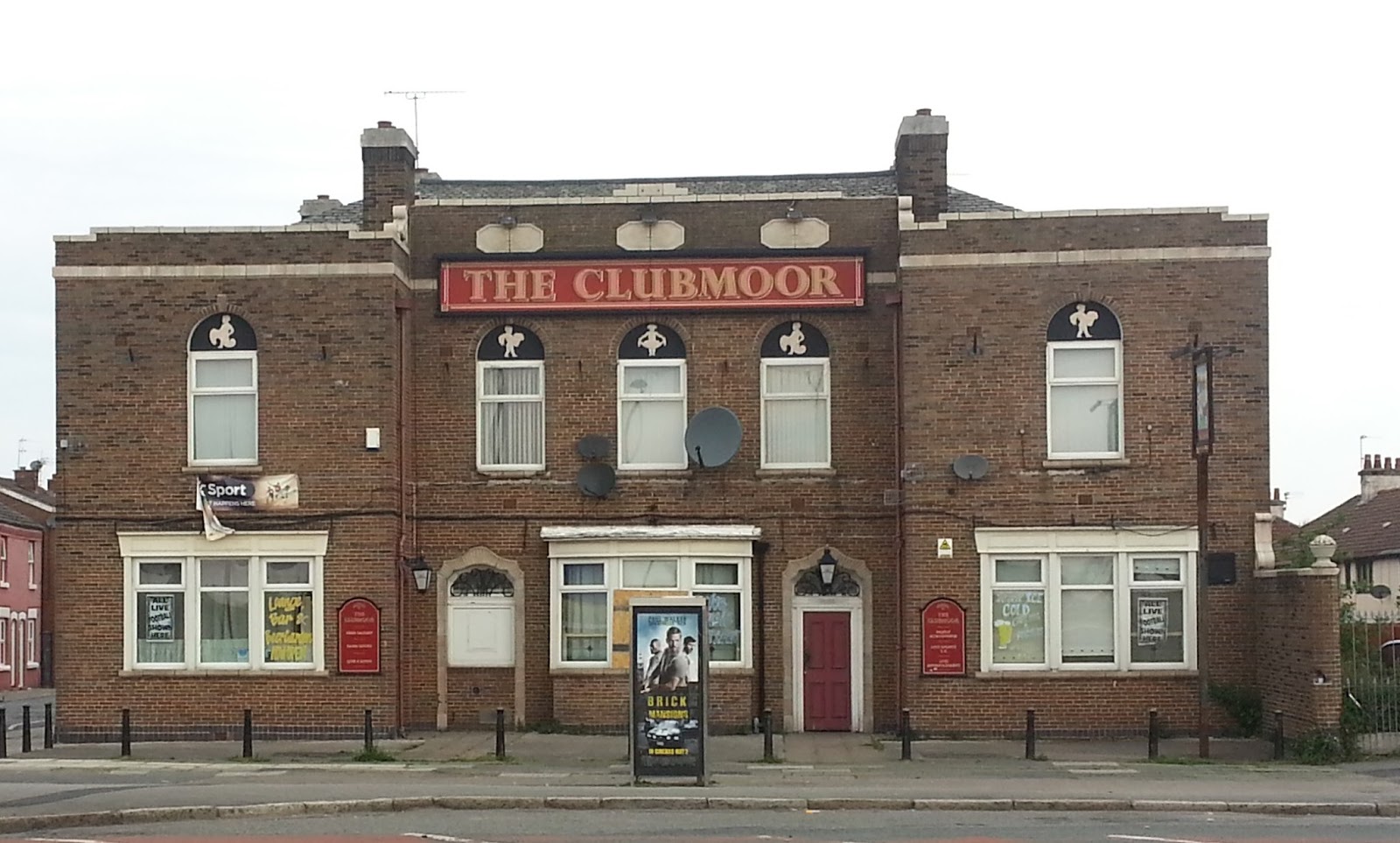
The inquest was held at the Clubmoor Hotel on 27th February. The following day's Liverpool Mercury said that Sarah was of 'very respectable appearance' and had swooned whilst listening to the proceedings and had to be helped back up. 'Hartley' was present and it came to light that his name was actually Eugene Auzon. After the coroner Mr Brighhouse had summed up and drawn attention to Hartley/Auzon's role, the jury found that Sarah had killed Maurice through neglect, while Auzon was an accessory after the fact.

On 17th March both appeared before Mr Justice Grantham at the assizes. The first witness was Mary Hickman, who agreed under cross examination that the couple had severe cash flow issues and had pawned nearly everything to buy food. Neighbours said that Sarah was very fond of her baby. With medical witnesses being unable to agree on the exact cause of death the judge summed up by saying that although it was a suspicious case the evidence did not point to food being wilfully kept from the child. On this basis the jury returned a verdict of not guilty and both prisoners were discharged.

Saturday, 27 June 2015

Judge Slams Liverpool After Manslaughter Verdict

A Judge laid into Liverpool after sentencing a husband for killing his wife, saying there was too much brutality in the city.

In 1905 John Hughes lived with his wife Catherine in Raleigh Street in Bootle. The marriage was not a happy one and their children were neglected, with Catherine being fined six times in relation to this. On the  evening of 14th December 1905 the couple began another of their numerous drunken rows during which 43 year old Hughes grabbed a table knife and stabbed her in the stomach.


Catherine died a few hours later and the following morning Hughes appeared before the Magistrates' Court charged with murder and was remanded in custody. The inquest on 20th December heard that the marriage was an unhappy one due to Hughes's drinking and returned a verdict of wilful murder.


On 21st February 1906 Hughes appeared at the Liverpool assizes before Mr Justice Grantham, where he was found guilty of manslaughter. The judge commented that 'there was too much of this horrible brutality and drunkenness' in Liverpool, although did say the situation had improved since he was last there.

Justice Grantham expressed astonishment that publicans continued to serve men like Hughes, who they knew so well, day after day and night after night. He then told Hughes, who had 36 previous convictions for drunkenness, that he had lived a life not fit for a dog and sentenced him to fifteen years penal servitude.

Monday, 18 August 2014

Pub Singer Killed

A man who enjoyed a sing song in a Scotland Road pub with friends ended up dead when a fight broke out after another customer objected to the noise. 

Scotland Road in 1908 (www.liverpoolpicturebook.com)On the afternoon of Saturday 13th March 1886 Patrick Heston, a 23 year old labourer went to watch a foot race in Walton with four friends. They then headed back towards Liverpool, stopping off for some beer in in Walton Lane and then Korn's public house at 203 Scotland Road.

Whilst drinking in the parlour they started to sing and did so for about twenty minutes. When a 40 year old named Thomas Doulan arrived, he told Heston at the end of a song that he couldn't sing any more and to sit down. Although Heston did so, his friend Patrick Rogan acted angrily and Doulan then took out a knife and said he could settle him, before waving it about indiscriminately.

Heston dived between the two men and gasped 'I am stabbed in the heart' before falling down. The pub landlord John Shied managed to get Doulan in a headlock, but he was still able to wave the knife about and slash two other men. Heston was carried into the snug but he died before an ambulance arrived from the Northern Hospital.

Justice Grantham
When police arrived Doulan was given into their custody, but he claimed that Rogan had struck him first and he had also been hit by another of Heston's friends. A post mortem revealed that the knife had penetrated into Heston's left breast and another artery had been severed on his leg. Doulan was charged with murder and first appeared at the police court on 16th March. It was clear from his appearance that there had been a severe scuffle, as his face was covered in scratches and his lip was cut.

Doulan appeared at the assizes before Mr Justice Grantham on 25th May. Evidence was presented to suggest that he had been placed under a great deal of provocation and he hadn't deliberately plunged the knife into Heston, rather waved a knife about at random. After being found guilty of manslaughter he was sentenced to just six months imprisonment.