Showing posts with label hanged. Show all posts

Thursday, 16 April 2020

Shot Dead Next to the River Alt

An ex soldier who shot is lover dead next to the River Alt in 1920 was found guilty of murder and sentenced to death. 

On the night of Sunday 21st March that year 35 year old Herbert Salisbury was arrested for being drunk and disorderly after falling in the road near the Blundell Arms at closing time. He had a revolver and cartilages in his possession and when asked where his wife was, replied "My wife is lying dead on the river bank, past Tommy Rimmers, on the main road. I shot her last night". Salisbury was held in custody whilst officers searched the location and found a body at the spot he had told them about.

The woman concerned was not Salisbury's wife but Alice Pearson, who had left her husband to co-habit with him. They had met in September 1918 whilst he was in hospital in Leeds, having been wounded on active service in France as a machine gunner for the American army. Salisbury had lived in Rhode Island for twenty years working in hotels, having been born and raised in England.     

38 year old Alice left her husband and began to travel the country with him from town to town after he was discharged from the army in February 1919, living off her savings. Alice was the daughter of a successful boot dealer and had not married until she was in her early thirties. The couple lived in Liverpool for some time before taking lodgings in Castle Street, Southport, in early March 1920.

On being told that a body had been located Salisbury replied "Thank God for that, we planned to end our lives together when the money was done. We had £700 and the money you found in my possession (£2) was all we had left".

Salisbury's trial took place at the Liverpool assizes on 22nd April. He pleaded guilty but the judge insisted on hearing the evidence to allow the jury to consider a verdict. The exact circumstances of the fateful day were never fully determined. It was known they had been expected back at their lodgings and were seen together outside the Royal Hotel in Formby at 6.30pm. An hour later, Salisbury was at the Blundell Arms on his own showing off the revolver. The court heard how a brave pub customer had heard Salisbury's claim that he had pumped four bullets into a woman and disarmed him when he fell and held him until the police arrived. 

Salisbury's counsel asked the jury to consider his state of mind and also whether manslaughter was more appropriate. In summing up however, the judge said drunkenness was no excuse and that if he fired a gun at a woman's face, there must have been intent to kill. It took just twenty minutes to return a guilty verdict and Salisbury showed no emotion as he was sentenced to death.

Salisbury made no appeal and was hanged on 11th May in a double execution at Walton gaol. The man hanged alongside him was William Waddington, an Oldham miller who had killed a seven year old girl.  

Sunday, 18 November 2018

The Poisoning Landlord


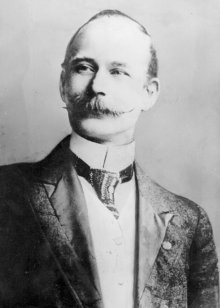
Frederick-seddon.jpg
A Liverpool born man who let greed get the better of him was hanged after he was found guilty of poisoning his tenant.  

Frederick Henry Seddon was born in Liverpool in 1872 and baptised at St Peters Church in Church Street. At the age of 21 he married his wife Margaret at St George's Church in Everton. They would have five children together. 

Seddon was an insurance agent and he was known to be energetic, respectable and charitable. During the Boer War he organised concerts at the Picton Lecture Hall in William Brown Street, with proceeds going to widows of servicemen.  At this time he was living at 88 Belmont Road, Anfield.

At the beginning of the 20th Century Seddon secured a position as superintendent with the Liverpool & Manchester was promoted to superintendent in his firm and moved to Buckinghamshire, where he began speculating in property. He bought a fourteen bedroom house in Tollington Park, North London in 1909 and the following year let the first floor to a wealthy spinster named Eliza Barrow. She moved in with Ernest Grant, the eight year old son of a friend who had died and who she was now the guardian of.

Eliza had substantial savings and annuities. However she agreed to allow Seddon to take a controlling interest in return for an annual sum and living rent free for life. 

88 Belmont Road
On 14th September 1911 Eliza Barrow died having suffered excruciating stomach pains. Just a month earlier, she and Ernest, along with Seddon's family, had holidayed together in Southend. Seddon then arranged for her to be buried in a communal plot instead of her family vault in Islington. 

When Frank Vonderahe, a cousin of Eliza's went to take over estate, he was informed by Seddon that there was nothing left after the funeral expenses and paying for Ernest's upkeep. Frank went to the police with his suspicions, leading to Eliza's body being exhumed on 15th November. A postmortem took place and two grains of arsenic were found in the stomach, leading to the arrest of Seddon and his wife. 

The trial took place at the Old Bailey, where it was proved Seddon's fifteen year old daughter Maggie had bought flypaper from a chemist. Against the advice of his counsel, Seddon conducted his own defence, suggesting that Eliza could have drank water that the flypapers had been getting soaked in. 

Seddon was found guilty and sentenced to death, but his wife Margaret was acquitted. He was hanged at Pentonville on 18th April 1912. Margaret returned to Liverpool, marrying American James Cameron just seven months later. She took the emigrated to America with him and the five children.

Thursday, 9 November 2017

Maltese Hanged for Norris Green Man's Death

In 1948 when 22 year old man from Norris Green was stabbed to death in Staffordshire, his Maltese killer was hanged at Walton gaol.

George Semini
Shortly after 10pm on Friday 9th October that year three young Liverpool men were stood outside the Talbot Hotel in Church Street, Newcastle Under Lyme. When a 24 year old Maltese man named George Semini walked past with a local lady, Majorie Seabridge, one of them made a remark about her height. Semini reacted ferociously, knocking one of them to the ground. Two passers by tried to restrain him but Semini broke free and knifed all three Liverpool men before running off across some wasteland.

Two of the men's wounds were not so serious, injuring the knee and One of the three men, 22 year old Joseph Gibbons, had been stabbed in the chest and died an hour later at the North Staffordshire Hospital. Joseph was originally from Berkswell Road in Norris Green and had been working in the area as a welder at a gasworks. He and his friends were at the end of their contract and had just been paid, so were enjoying a last night out in the area before returning to Liverpool the next day.

Twenty Four year old George Semini, a Maltese national who working at a local mine in Knutton, was arrested at a miners hostel. He was charged with murder and remanded in custody at a special sitting of the police court the next morning. At the inquest Joseph's father described him as peaceful and of amiable disposition and said he had recently been discharged from the army.

At this trial at the beginning of December, portrait photographs were produced of Semini holding a knife. Semini did not deny the stabbing, but said it all happened in a haze and couldn't remember exactly what happened. The fact he had been held back but broke free did not bode well for him and he was found guilty. As he was sentenced to death, Marjorie Seabridge broke down and cried and a Maltese in the public gallery shouted 'Injustice'.

Semini's lawyers appealed on the basis it was a chance medley, but this was rejected. Lord Chief Justice Goddard said in his reasons that there was no reason to draw the knife and called the stabbing a dreadful and cowardly act of revenge. 

The day before his execution Semini was visited by his friend Joe Marguerat. Semini asked him to buy a gold locket and chain so a photograph of him could be put in there for his wife and son in Malta. On the day itself, 27th January 1949, Marguerat was one of two Maltese nationals outside the gates of Walton gaol and told reporters he had promised to look after Semini's family. Semini also had an unlikely sympathiser in Joseph's mother, who wrote to him in prison saying she knew he hadn't intended to kill him.


Sunday, 21 June 2015

Butcher Who Helped Neighbour Killed

A man in Vauxhall who offered help to a female neighbour who had been thrown out of the house was killed by her husband, who was hanged for his crime. 

On the evening of 18th July 1877 a butcher named John Campbell was having supper at his Latimer Street home with several family members. A lady called Mrs McGovern attended, saying she had been thrown out by her forty year old husband Patrick and she joined the supper party for a couple of hours.


Shortly after midnight Mrs McGovern went back to her husband who was a marine store dealer. A few minutes later John went to the McGovern household to check everything was okay and told Patrick that he had been wrong to do what he did. Without any further provocation, Patrick picked a kitchen knife up off the table and plunged it into John's abdomen.

John ran back into his own house screaming, the knife still embedded in his body. His sister in law Ann Kearns pulled it out and sent for a policeman. When an officer arrived McGovern was taken into custody and John was removed to the Stanley Hospital. With John in a critical condition a magistrate's clerk took a deposition from him the following day in the presence of McGovern. 

John lingered on until 24th July when he died, leading to McGovern being committed to the assizes for trial. At the magistrates court hearing Detective Inspector Carlisle explained that McGovern was also under investigation for stabbing his wife's brother, who lay in a dangerous state at the Northern Hospital. He was a man known to have a history of drunken violence, once being sentenced to two months imprisonment for assaulting his wife.

When McGovern appeared before Mr Justice Hawkins on 3rd August, his defence counsel tried to suggest that the killing was no more than a struggle and it was John who had gone around with the knife. They added that by harbouring Mrs McGovern after she had been thrown out of the house, it was an act of sufficient provocation to reduce the crime to manslaughter. 

In summing up though, the judge said that given all the facts, he was at a loss to see how there could be any mitigation to reduce the crime from murder to manslaughter. This led to the jury taking just a few minutes to return a guilty verdict and McGovern responding by saying 'I am innocent of it I know nothing at all about it.' As he passed the death sentence Justice Hawkins showed no pity, telling McGovern that 'anybody that has heard the case can not hesitate to come to the conclusion that yours was the hand that inflicted the deadly wound.'

After being sentenced McGovern fainted and had to be helped up by two warders. His wife screamed and howled, and had to be escorted out of the courtroom. McGovern was hanged at Kirkdale gaol on 21st August, alongside John Golding who had killed his neighbour in Edge Hill. He showed a complete indifference to his fate whilst at Kirkdale, but as he was brought out into the prison yard he was trembling and had to be held up by warders to stop him fainting as the noose was being put around his neck. When the bolt was drawn by William Marwood, he dropped to an instant death and was buried within the precints of the prison.


Saturday, 20 June 2015

Revenge Poker Killer Hanged

A man who got beaten by a neighbour who he challenged to a fight got his revenge by killing him with a poker, leading to him being hanged at Kirkdale gaol.

In 1877 John Golding, a 25 year old former soldier lived with his mother in Shenstone Street in Edge Hill whilst working as a labourer. At about 1030pm on 16th July that year he knocked on the door of a neighbour named Thomas Vaughan and asked him come outside with him to help 'soften someones head.' Vaughan declined  the invitation but Golding went ahead and challenged another neighbour called Daniel Lloyd to a fight. He then punched Golding to the ground and with his head bleeding, two neighbours then helped him home and dressed the wound.

A few minutes later Golding came out of his house with a poker and smashed Lloyd's window. When his wife Sarah came to see what was happening Golding pushed past her then struck Lloyd, who was sat at a table, four or five times on the head with the poker. Lloyd was taken to the Royal Infirmary,where he died on 24th July from a fractured skull having never regained consciousness.

The following day Golding, who had been remanded in custody the morning after the incident on a charge of assault, was committed to trial at the assizes after the inquest returned a verdict of wilful murder. At his trial on 3rd August Golding had nobody except his defence counsel advocating for him. His neighbours weren't concerned about his predicament, having described him to journalists as a 'violent fellow' and a 'terror of the neighbourhood.' He had previously been in trouble for assaulting police. 

The jury found him guilty of murder but with a recommendation for mercy. In sentencing him to death Mr Justice Hawkins told Golding that his version of events was untrue, there had been no provocation and the killing had taken place out of 'revengeful feeling.'


On 18th August communication was received from Whitehall that the Home Secretary Viscount Cross could see no grounds for a reprieve and the execution was confirmed for the following Tuesday 21st August. Golding had been hopeful of being spared the death sentence but he now resigned himself to his fate, attending divine service on the Sunday and being given communion by Father Bonte.


The executioner William Marwood arrived at Liverpool on the Monday having travelled from Ipswich, where a hanging he had been scheduled to carry out was postponed at the eleventh hour. The weather was befitting of an execution, with rain coming down in torrents throughout the night and the sky being filled with black clouds at 745am when the press were admitted to the gaol and bells began to toll.

At 8am the prison governor and Father Bonte came into the yard followed by Golding and Patrick McGovern, who was from Latimer Street and also being hanged for killing a neighbour.Golding remained calm, albeit extremely pale, even when Marwood took time adjusting the rope after being dissatisfied with his first attempt. He then writhed for two to three minutes after the bolt was drawn before life was finally pronounced extinct.

Friday, 29 May 2015

Liverpool Man Shot Dead in India

A Liverpool businessman was shot dead in India in a case of mistaken identity by a revolutionary who was later hanged for the killing.

On the afternoon of Saturday 12th January 1924 a Bengalee man named Gopinath Saha shot at a man in Chowringhee Road in the European quarter of Calcutta. After the man fell to the ground Saha then pumped six more bullets into his body as he lay motionless, before running off and firing indiscriminately with a pistol and revolver.

A taxi driver who joined in the chase being shot at and badly wounded, but after a quarter of a mile Saha managed to stop a private car and threatened to shoot the driver if he didn't take him away. However the brave man refused and the subsequent bullet only grazed him before a tramcar driver did manage to grab hold of Saha and hand him over to the police.

The two badly wounded men were taken to the hospital where the European died from his injuries. He was named as 36 year old unmarried businessman Ernest Day of the Indian General Steam Navigation Company. He was the son of a Liverpool sea captain of the White Star Line and had been in India ten years, returning home only once during that period. He had been expected to come home for twelve months leave later that year.

Police officers searched Saha's home in the Serampore district of the city and recovered a number of documents. They then moved on to the Indian National congress where some suspected co-conspirators were arrested. Eighteen year old Saha, who had given up his studies two months earlier to join the non co-operation movement, appeared in court on the Monday morning. He apologised for killing an innocent man but said he hoped there would be another patriot willing to carry out his intended task, that of killing Calcutta's police commissioner Sir Charles Tegart.

When Saha stood trial on 16th February his defence counsel tried to plead insanity, but the prosecution successfully argued that the fact he tried to escape was an indication he knew he had done wrong. This led to a guilty verdict and the death sentence being passed. He was hanged on 1st March.


Friday, 20 March 2015

Bootle Man Hanged For Killing Wife

In 1884 Peter Cassidy killed his wife and claimed it was in retaliation for being struck, but the prosecution were able to prove that there had been a pre-meditation on his part to commit murder anyway.

Cassidy was a 54 year old tinsmith with the Cunard shipping line who lived at Howe Street in Bootle. He had been married to Mary for over twenty years and they had three children, one living in America, one in domestic service in Manchester and the other at an industrial school. The marriage was not always a happy one with both drinking regularly and there were frequent quarrels. Mary often left for brief periods and it was after she had gone to stay with their daughter in Manchester for ten days in June 1884 that the murder was committed.

While Mary was away Cassidy was visited by a man named Mr Swift, whom he was hiring furniture from. Payments had not been kept to and Swift removed then items, promising to return them when the outstanding amount was paid. Mary returned on 25th June but first went to the room of Mr & Mrs McGee, who gave her some tea. When Cassidy heard that she was there he went and angrily confronted her, saying he had even been to Manchester looking for her. He demanded she return to their room to tidy up but Mary said that she was ill, although she did agree to come up if he helped.

St Mary's Church BootleSoon afterwards they went up to their room but when Mr McGee heard two loud thuds he went to investigate, and saw Mary lying in a pool of blood with Cassidy next to her. Caught red handed, Cassidy said ‘Alright Pat I done it and will stand for it.’ Mr McGee went for a policeman and when he arrived and asked Cassidy what happened he produced a bloodied mallet. He was taken into custody and a doctor called who confirmed the death. A search of the room also found a blood covered meat cleaver hidden behind some boards. As he was being transported to the Bridewell he said ‘Well I don’t know what to say about it I’m sorry it happened.’

After the inquest returned a verdict of wilful murder on 28th June Cassidy appeared at Bootle police court two days later for committal to the assizes. On the same day Mary was interred at St Mary’s churchyard, a large crowd singing hymns at the graveside. The only relative present was their daughter who fainted as the coffin was lowered into the grave.


Cassidy appeared before Justice Day at the assizes on 31st July. Mr McGee recalled finding Cassidy standing next to his wife’s body while the police officers who were called testified to his responses. Mr Swift who had hired out the furniture told how four days before the killing Cassidy was scathing about his wife’s habits and said he would ‘do for her.’ The doctor who attended said that there was a cut and bruise above Mary’s eye which was probably caused by the mallet, but the cause of death was due to a fractured skull, which had been pierced three times by the cleaver.

A statement from Cassidy was put in to the effect that he had been chopping some wood chips when Mary hit him with the mallet, leading to him retaliating with the cleaver and not intending to kill. Several witnesses testified to Cassidy’s character and even Mr McGee acknowledged that when the couple weren’t in drink he was a kind husband. This though didn’t sway the jury who found him guilty of murder but with a recommendation of mercy. Justice Day told him that he would forward the recommendation on but he should not be buoyed by it and then passed the death sentence in the usual form. 

Cassidy, who had remained motionless throughout the trial, didn’t say a word as he was removed from the dock. After a petition forwarded to the Home Secretary by his friends asking for a reprieve was refused he was hanged at Kirkdale by James Berry.


Wednesday, 18 March 2015

Hanged For Killing Wife's Grandmother

Charles Dutton was hanged for  killing his wife’s grandmother after the couple had had an argument earlier in the day.

Hannah Hamshaw was a 70 year old widow living at 160 Athol Street in Vauxhall with her granddaughter Charlotte and her husband Charles Dutton, a 23 year old driller who was commonly known by his middle name of Harry. The couple had been married in May 1883, with Dutton being known to be violent on the occasional times he drank to excess.

On the afternoon of 6th October that year Charlotte was at her friend Harriet Kay’s home at St Martin’s Cottages in Silvester Street. Dutton arrived, having clearly been drinking and some words were exchanged between him and Charlotte, who then left with him. Twenty minutes they returned and Dutton attempted to strike his wife but Harriet intervened, telling him to leave the property. He did so but Charlotte went with him and Harriet followed them to Athol Street, observing him making threats all the way.

Later in the evening Dutton knocked at Harriet’s home asking if Charlotte was there, saying they had had words over tea and she had ran out. Harriet replied she had not seen her and he replied that he would ‘do for one of them tonight’ and went to a public house in Athol Street. At around 11pm Harriet went to fetch Charlotte and took her to St Martin’s Cottages for her own safety. After midnight, Harriet’s husband James went to check on Hannah, but Dutton refused to open the door claiming that there was a mob there as well who were after him.

Knowing something was not right James sought the help of other neighbours and forced entry through the back, finding Hannah sitting down and bleeding heavily. A doctor was called but on his arrival Hannah was quite insensible and lived for only another ten minutes. There were wounds all over her face and upper body, which he concluded had been brought about by considerable violence. Dutton was arrested soon afterwards hiding under the stairs in  a friend's house nearby.

Dutton was tried before Mr Justice Denman on 17th November. One neighbour told how on the night of the murder they had heard Dutton shout ‘Tell me where my wife is or I’ll do your entails in’ while another told how Dutton had asked to swap jackets to avoid detection. The doctor who had attended that night said the injuries were inconsistent with a fall and that Hannah was otherwise healthy.

The defence counsel acknowledged that Dutton had carried out the killing, but said that there had been no intent to kill and that it had occurred in a fit of mental aberration, meaning manslaughter was more appropriate. The jury though disagreed, finding Dutton guilty of murder following half an hour’s deliberation. Justice Denman made it clear he had no qualms with the verdict, telling him prior to sentence ‘If the jury had not found you guilty of hat crime upon such evidence as what was given it would have been a great misfortune for the inhabitants of this country.’ Dutton then showed no emotion as the death sentence was passed in the usual form.

He retired to bed late on 2nd December, the night before the execution, but still slept awkwardly. He rose as early at 4am and the sacrament was administered, then he ate a hearty breakfast at 730am, just half an hour before the execution. It was a drizzly and foggy morning but this didn’t deter around 300 morbid people from gathering outside the gaol and waiting for the black flag to be hoisted. At 8am Dutton was hanged by Bartholomew Binns, who was officiating at Kirkdale for the first time. He used a wrong sized rope, meaning the prisoner writhed around in agony for two minutes before losing his senses and life was not extinct until six minutes after the bolt was drawn. 


Tuesday, 10 March 2015

Rat Catcher Hanged

A pest control expert was hanged after killing his wife due to her drunkenness, the jury refusing to believe his explanation that she had cut her head on a box after falling over.

James Trickett was 42 years old and lived with his wife Mary and two young children in Hopwood Street, Vauxhall. He worked as a freelance rat catcher, regularly being employed by the local corporation, dock board and large mercantile firms. He was also known as a bird fancier, having a number of cages in his house and yard from where he also sold seeds.

At around 8pm on 26th December 1877 a neighbour Margaret Brown heard screams coming from inside Trickett’s property and looked through the window, where she saw Trickett kicking at his wife. A boy was screaming ‘please come to bed mother.’ After discretely waiting around Margaret saw Mary get up and sit on a chair, before going upstairs. She then heard Mary scream again and her husband shouting ‘Is this not a nice bed for a man to lie on.’

Demetrius Caralli, a carter who lived opposite also heard some of the commotion but was so used to it he did not investigate any further. Trickett’s son went over and asked for help but he would not intervene. A few moments later Trickett came out looking wild and with bloodied hands, went into a herbalists shop next door saying ‘it is done’ and then returned home and put the shutters up. A flatman named John Shore who was returning to his home two doors away was passing Trickett’s house when he appeared and said ‘come in John I have killed the wife’. John went upstairs and saw Mary lying semi conscious on the floor with a knife next to her, although there was no blood.

In desperation, Trickett’s son went to Susannah Bowen’s house at the corner of Hopwood Street and Latimer Street, saying to her ‘For God’s sake please come and see if you can help me.’ Susannah did go there and found Trickett bathing Mary’s forehead with a sponge and he asked her to send for Father Duggan. Susannah replied that a doctor was needed too and when asked by Trickett to lie for him and say she had fallen down the stairs and hit her head on a box, she said she could not do so.

It did not take long for the police to become aware that something was wrong and at 8.30pm Inspector Donaldson arrived, by which time Mary had passed away. Trickett was still bathing her head and said she had fallen down the stairs, but the officer noticed there was now a large amount of blood on the floor and bedclothes. Inspector Donaldson made a brief search of the house but could find no murder weapon, but he did notice there was no blood on the stairs which would have been the case if Trickett’s version of events was true. As he was taken into custody Trickett said ‘God knows I love her but if I am going to be hung for it so be it, she has been drunk for the last 31 weeks.’

As Trickett was being taken to the Main Bridewell he fainted twice. Constable Grayson made a more thorough search of the bedroom and found two parts of a broken stick, one of them having blood at the end of it. The doctor who carried out the post mortem found wounds on the cheek and forehead, of the size that could have been caused by the stick that Grayson had found. A six inch wound was found in the body which had penetrated the liver, and was believed to have been caused by a knife. On 29th December an inquest revealed that Mary was in the advanced stages of pregnancy and returned a verdict of wilful murder against her husband.

At the assizes on 24th January 1878 Trickett pleaded ‘not guilty’ firmly and gave a military salute. Neighbours gave evidence and Dr Costine said there was no way the wound in the body could have been caused by falling on a box. Trickett’s defence said that there was no aforethought or malice and that instead he should be found guilty of manslaughter, albeit of the worst kind. After fifteen minutes deliberation the jury asked for clarification as to whether any of Mary’s clothing had been penetrated during he stabbing. Dr Costine produced her gown and chemise, both of which had been cut and after another fifteen minutes a verdict of guilty of murder was returned, with a strong recommendation for mercy on account of the provocation received.


When asked by Baron Pollock if he had anything to say, Trickett gave quite a lengthy statement, saying that on returning home that evening he found his wife in a drunken condition and as he was preparing his supper and lighting a fire, she fell off the stool and cut her head. He finished it by saying ‘When my wife was sober I had a heaven of a home with my meals regular and rooms clean, but when she turned to drink it was the opposite way.’ Baron Pollock though dismissed this statement saying he was at a loss as to how Trickett thought this explanation of her death could be believed given the evidence. Telling him he was supposed to be his wife’s ‘natural protector’ but had instead gave ‘considerable brutality’ the judge passed the death sentence and as he was removed to the cells Trickett waved to somebody. 

After appeals to have his sentence commuted to life imprisonment failed, Trickett was hanged at Kirkdale gaol on 12th February 1878, safe in the knowledge that his children had been taken under the protective wing of their uncle rather than being admitted to the workhouse..

Monday, 9 March 2015

Landlord's Girlfriend Stance Leads to His Murder


A man who killed his girlfriend's landlord who objected to him spending time with her in the parlour was hanged after stabbing him to death in Everton.

In 1876 Richard Thompson, a 22 year old labourer, was courting a lady named Mary Corfield who lodged with John Blundell and his wife in Haigh Street. Blundell wasn’t happy about the two of them often being alone in the parlour and expressed his dissatisfaction at this, but as Thompson had been best man at his wedding four months earlier there was little expectation that the situation would deteriorate so much. Things came to a head on 14th April 1876 when Thompson walked past and saw Blundell’s wife Margaret on the step. He swung his belt and shouted at her ‘Send him out and I will put him in his coffin before the night is over.’

The following evening, Blundell was helping Mary’s brother William move house and was carrying a box down nearby Coronation Street. They came across Thompson who immediately acted with a threatening demeanour, and after Blundell asked ‘What’s to do with you Dick’ he was grabbed around the neck. Thompson then took an open knife out of his pocket and stabbed Blundell up to twelve times. Blundell was taken home but as he was bleeding heavily he was admitted to the Workhouse Hospital, where he died on 17th April at around 10pm. Around four hours earlier, Thompson had handed himself in to the bridewell at Rose Hill having been on the run since the stabbing.

Whilst close to the point of death 23 year old Blundell had told the chaplain, Reverend Ebenezer Smith that he ‘freely forgave Thompson’. His condition had deteriorated quite quickly and a magistrate sent to take a deposition didn’t get there in time. However the evidence of William Corfield and a boy who was shown a knife by Thompson earlier in the evening but told not to worry it was for someone else, was enough for the inquest to return a verdict of wilful murder. He was then committed to the assizes on a coroner’s warrant and listed to appear before Mr Justice Lindley on 29th July.

There was little doubt that Thompson had carried out the stabbing, the only issue was whether it was manslaughter or murder. In summing up, the judge said that if there had been no provocation then the jury had to return a verdict of murder, even if there had been no intent to kill. It took ten minutes for them to find Thompson guilty and he said ‘I would liked to have seen my witnesses he threatened to lay me out.’ Justice Lindley said that death had resulted from ‘too free use of the knife’ before donning the black cap and passing sentence. Thompson, who had remained calm throughout the trial, then burst into tears before being taken to the cells.

Thompson's solicitor Frederick Ponton of Vernon Chambers in Dale Street fought hard but on 12th August the Home Secretary wrote to him saying he could see no grounds for granting one. He remained indifferent to his fate, taking little notice of the chaplain and not requesting a final visit from his mother, who he had last seen on 7th August. Instead he remained satisfied that he would receive divine forgiveness as his victim had forgiven him.

After having the rope put around his neck Thompson was crying and singing ‘Safe in the Arms of Jesus’. The bolt was then drawn by hangman William Marwood and he dropped to his death alongside William Fish, a barber from Blackburn who had been convicted of raping and murdering a 7 year old girl.  


Tuesday, 7 October 2014

Lodger Hanged for Shooting Landlady

An argument over whether or not to go to a party in 1921 led to a woman being shot dead by her lodger who was hanged for then killing.

43 year old widow Olive Jackson cohabited with customs officer Richard Duff in Newby Street, Walton. A 43 year old ship's steward named Thomas Wilson lodged with the couple when he was on shore leave and the three adults regularly went out together.Wilson appeared to have some affection for Olive, as at Christmas 1920 he was angry when he saw her kissing another man under the mistletoe.

On the evening of 9th April 1921 Wilson went out with Olive, but near to midnight they got into an argument over whether or not to continue to a sing-song at another address. Wilson objected to one of the male guests, who he didn't believe was fit company for Olive. He eventually agreed to go, only to take out a revolver and shoot Olive dead. Neighbours rushed to the scene and found her body riddled with five bullets.

Wilson had already made his escape and stayed at a guest house near Lime Street station, giving his name as Smith. The following morning he was spotted by detectives trying to buy a ticket to London at the booking office and surrendered when Constable Hanlon pointed a gun at him as he put his hands towards his own hip pocket.

When Wilson was taken into custody he was searched and a revolver and ammunition recovered. He admitted carrying out the shooting, but insisted he did not intend to kill Olive.

On 12th April the inquest took place and on seeing Wilson in the dock Richard Duff shouted 'YOU MURDERER' before collapsing. He managed to recover and give evidence, then tried to get at Wilson, leading to several court officials intervening to restrain him. Five police officers were required to carry him out of court, where he was in a state of collapse and had to be given medical attention.

After the coroner's jury returned a verdict of wilful murder Wilson was committed to trial at the Manchester Assizes, where he was found guilty on 2nd May and sentenced to death. As he left the dock Wilson made a sign of the Cross and he was hanged at Strangeways on 24th May.

Tuesday, 30 September 2014

Court Order Can't Save Wife and Two Children

There was a triple domestic tragedy in 1919 when a man killed his wife and their two children before unsuccessfully trying to commit suicide himself, leading to his arrest and execution.

West Derby Road 1913 (www.liverpoolpicturebook.com)
Early that year Russian Jew David Caplan and his wife Freda, who was originally from Liverpool, came to the city from Leeds and took a job as a tailor's cutter. Freda opened a haberdashery shop in West Derby Road, and the couple lived there with their two sons, four year old Harry and seven year old Maurice.

Relations soon deteriorated between the man and wife, with David being fined for throwing boiling water at her on one occasion. With the help of her sister Minnie, Freda obtained a Separation Order but it didn't require David to leave until 20th October.

On the morning of 14th October 1919 Freda's brother Myer Waterman noticed that the shop wasn't open and went around the back, climbing over the yard wall. On looking through the kitchen window he saw 42 year old David on the sofa, unable to speak and bleeding heavily from the throat.

The police were called and after forcing entry they went upstairs and found both children dead while Freda was unconscious but still alive. All three had severe head injuries and seemed to have been battered with an iron which was covered in blood. A neighbour came forward to say she had heard screams around 6am but was so used to hearing the couple arguing that she didn't give it any extra thought.

The two adults were taken to hospital where David was operated upon but Freda was beyond recovery and died the following morning. David was soon well enough to be committed to the Manchester Assizes for trial and on 2nd December his plea of insanity was rejected by doctors who examined him, leaving the jury with no option but to return a guilty verdict.

An appeal against the death sentence, based on the fact David's mother had been in an asylum in Russia, failed and he was hanged at Strangeways Gaol on 6th January 1920.


Monday, 29 September 2014

Widow Killed by Jealous Brother-in-Law

A man whose brother was killed in action during World War 1 was hanged after he murdered his sister-in-law when she spurned his advances.

The war had not been a happy one for Mary Ellen Rooney, who lost two husbands as a result of the fighting.The second was killed in action in France in July 1918 and after this happened she went to live with her mother in Elm Grove, off Smithdown Lane.

Her second husbands older brother William Rooney, a 51 year old labourer, lived opposite with his mother. Mary used to do house work for William's mother but became afraid of going there due to the unwelcome advances and when she refused to go to the picture house with him, William threatened to kill her and knife.

When Mary's uncle confronted William about the threat, he said it was his younger brother who acted like this and she must have been confused due to her grief. Mary went away for a week or two but on return was visited by a soldier on leave, to whose presence William objected and he challenged him to a fight in the street.

On the afternoon of 2nd November, Mary agreed to go for a drink with William and they appeared on friendly terms. However that evening when Mary went into a shop in Paddington to buy some eggs. William followed her in and grabbed her shoulder, then stabbed her in the neck twice before some passers by managed to overpower him. A doctor driving past saw Mary bleeding and gave assistance, but there was little he could do as the jugular vein had been cut. She was rushed to hospital but died as doctors prepared to operate.

William gave no resistance and admitted what he had done when a policeman arrived at the scene. The inquest was held on 5th November, with William's mother giving evidence that his father was currently in the Rainhill asylum and two of his sisters and a brother had also had a history of mental illness.

A memorial service was held for Mary at St Stephen's Church in Grove Street and William was committed for trial at the Manchester Assizes that took place three weeks later. During the intervening period, an armistice was signed but there would be no reprieve for William  the defence being unable to show that William was not in control of his actions. He was found guilty and sentenced to death, showing no emotion as the verdict and sentence were read out. On 17th December, William went to the gallows at Strangeways gaol.

Friday, 4 April 2014

Execution Ends 'Merry Life'

A teenager who killed two farm workers in an arson attack was hanged in 1882, bringing to an end what he described as a 'short life and a merry one.'

Originally from County Mayo in Ireland, Bernard Mullarkey came to England in 1879 at the age of 16. He had a brief spell in the army with the 95th Regiment of Foot, from which he deserted, before taking a series of labouring jobs and eventually ending up in Maghull where he worked for a farmer named John Sumner.

Mullarkey slept in an outhouse on the farm with three other workers, a father and son both named Thomas Cruise, and a man named Thomas Jordan. There appeared to be no ill feeling between them at first but during the month of September 1882 Mullarkey began to tell the others he would 'swing for them' and set fire to the outhouse. He also made a threat to do so whilst in conversation with a fellow drinker in a local pub.

On the 25th of that month, all four men went to Bradley's provisions shop in the evening and on returning to the farm, Mullarkey told the others he was going to the washhouse and they went to sleep in the loft. Soon afterwards though, one of them men was awoken by screams and saw that the barn was alight. As they desperately tried to put the flames out with sacks, one of them looked out of the window to see Mullarkey standing in a courtyard, having got the horses out of danger. Rather than get a nearby ladder to help, Mullarkey instead went away to find Mr Sumner and by the time he arrived back one of the three men, the elder Thomas Cruise, was dead.

After putting out the flames a police sergeant who arrived on the scene asked Mullarkey what he knew. Giving his name as Charles Rogers, he said that he had fallen asleep drunk in the washhouse and woke to find the building on fire, having no idea how it had started. The policeman was able to establish that the fire had been started from below the loft, indicating that none of the three men in there could have been responsible. Mr Cruise's body was also found to have received a blow to the head before the fire had started.

A Coroner's inquest returned a verdict of wilful murder and Mullarkey was committed for a trial that took place at Liverpool Assizes on 17th November. The evidence against him was largely circumstantial as nobody had seen him start the fire or enter the outhouse. However, in summing up, Justice Day pointed to the threats made a few days before, his odd behaviour at the time of the fire and the fact that those giving evidence as to his conduct had no reason to lie. Damningly, he also said that if Mullarkey set fire to the building knowing somebody was inside then it was murder. The jury took just seventeen minutes to return a verdict of guilty.


On being sentenced to death by, Mullarkey replied : 'Well sir, you can only judge a fellow on this earth. You can not judge me in the next, where we shall all be judged. I am as innocent of the crime I am going to swing for as the child who is not born yet.'

Whilst awaiting his fate in Kirkdale gaol Mullarkey was visited by two cousins, but he refused to allow his parents to spend what little money they had on coming to see him. In his final letter to them he wrote that he had been an indifferent son, but his life had been 'a short and merry one.' On 4th December Mullarkey got up at 6am, had a good breakfast and was attended to by Father Bonte. He was hanged by William Marwood, having walked firmly to the scaffold..

Wednesday, 19 March 2014

Murder on a Canal Boat

A man who brutally battered his wife on a boat, causing her to die of her injuries a week later was hanged in a triple execution at Kirkdale Gaol.

Originally from Scarisbrick, William Worthington was a 33 year old 'flatman', employed on a flat bottomed horse drawn canal boat that carried coal between Liverpool and Wigan. He lived on board along with his wife Ann, their two young children and her daughter from a previous marriage that had left her widowed.

On 29th August 1874 a woman in Vauxhall Road heard screams going on for a quarter of an hour and when she looked out of her window she saw Ann crouched down in a yard where flatmen tethered their horses. William was standing over her, kicking away at her body. The woman and a male passer by both told him to stop, but were told to mind their own business, leading to the male whistling for a policeman.

Even though Ann's face was covered with mud and blood and she was in a distressed state, the policeman who arrived on the scene took no action on establishing they were man and wife. Instead he told the couple to go home and make it up, even when Ann asked the officer to take her husband away. The brutality had taken place due to him being unhappy that she gave him only a shilling when he asked for some money.

On getting back on board the boat, which was moored under the bridge at Boundary Street, William continued his assault in front of Ann's daughter, administering one kick into her abdomen that was so hard it broke the stay-bone of her corset. He then went asleep but continued his assault the next morning, hitting Ann with a poker. Ann managed to get away and stayed for a week with a wellwisher called Mrs Duffy in Hopwood Street before being taken to her sisters address in Wigan. Whilst there her condition deteriorated and she died on 10th September, having suffered a broken collarbone, ribs and severe internal injuries.

The terrible deed was unprovoked and no doubt fuelled by drink, which turned William from being a kind man devoted to his family to someone in a complete rage. William was arrested on 10th September and transferred to Liverpool a few days later. he told the police officer who transferred him that it was a 'bad job' and that he wouldn't have done it for a thousand pounds now.


William was tried on 16th December, the medical evidence showing that Ann had died from pluro-pneumonia aggravated by violence. The only defence that could be offered was that William did not intend to cause death but he was found guilty of murder and sentenced to death by Judge Mellor, who informed him that he would pass the jury's recommendation for mercy to the Home Secretary.

Whilst in Kirkdale awaiting his fate William seemed confident of a reprieve but no appeal was forthcoming and his execution was fixed for 4th January 1875. John McCrave and Michael Mullen, who had been involved in the Tithebarn Street Outrage, joined him on the scaffold. Worthington, clutching a white handkerchief, was the first to be pinioned in what was an extremely efficient operation, all three dying instantly when the bolt was drawn.                                                        

Saturday, 15 March 2014

Double Booking Postpones Execution

A sixty year old man that killed his lover who was only half his age was hanged at Kirkdale, but faced the agony of his execution being postponed at the last minute due to the Hangman's services being required elsewhere.

Richard Spencer was born in 1812 and from the age of five was brought up by his grandparents, his mother and father having emigrated to Australia. They wished for him to join them and sent funds over to England, but he chose not to go there. At the age of sixteen he married in Manchester, and remained with his wife for nearly 25 years before separating, both accusing the other of too much drunkenness.

Whilst in his mid forties Spencer got involved with Elizabeth Wharton, who lived in Liscard but travelled to Liverpool every day to hawk fish and poultry. Spencer ran his own fishmonger business and was quite well off, and he persuaded Wharton, who he described as 'a fine buxom Cheshire lass' to live with him, despite her still being in her teens. For fifteen years they lived happily together in Breck Road, where Spencer's business was a success, but towards the end of the 1860s things weren't so successful. This, coupled with Wharton turning to drink led to Spencer becoming depressed and in ill health, leading to him going to see his sister in Yorkshire in the summer of 1872.

To raise funds when Spencer was away Wharton sold much of the furniture and also some valuable pictures, which was particularly upsetting for him. When he returned they lived in Coniston Street for a brief period and then moved to Gregson Street, where he intended to start up in business again. Spencer was jealous of Wharton's friendships with other men, although there was no hint of what horror would take place early in the morning of 9th August when Spencer shot Wharton before attempting suicide.

The couple went to bed on the previous evening without having had a drink, but about 7am Wharton was awoken by a blow to the head, with Spencer saying he wanted them to die together. She managed to get away to a neighbour, who went to the property and found him with a wound to the forehead and bleeding from the ear. The police were called and on their arrival, he handed the officer a revolver and begged him to put him out of his misery.

Both were taken to the Royal Infirmary, where Wharton was able to give a deposition stating that Spencer was a heavy drinker who had often threatened to kill her, leading to her sleeping with a knife under her pillow. She denied ever being unfaithful and died three days later. Spencer recovered and was handed to the police on 26th September, telling the court as he was committed for trial that Wharton's drunken habits had led to his furniture being sold. At his trial Spencer claimed that he was trying to shoot himself but missed, causing a bullet to hit Wharton instead. However this didn't convince the jury and he was found guilty and sentenced to death.

The execution at Kirkdale was fixed for 6th January but two days beforehand it became apparent that William Calcraft was also required for an execution at Durham on the same day so it was put off for two days. When Spencer was told of this, he was distraught, having thought he was about to be given news of a reprieve and also claiming that he didn't even know it was meant to be taking place on the 6th. On the morning of 8th January Spencer, who was said to have aged twenty years whilst in the condemned cell, had to be helped to the scaffold, with the Liverpool Mercury describing  that 'the unhappy wretch was launched into eternity with scarcely a struggle.'

Thursday, 6 March 2014

Man Hanged For Killing Wife Who Wouldn't Get Back With Him

A man who came to Liverpool from his Birkenhead lodgings in the hope of winning back his wife's affections stabbed her when she refused to resume normal marital relations, leading to him being hanged after she died two months afterwards.

On the 8th June 1860 Thomas Gallagher, a 40 year old shoemaker, took the ferry to Liverpool and went to Copperas Hill, where his daughter from an earlier marriage lodged with a lady called Mrs Detreks. Whilst visiting her he was told that his wife was likely to call around some time that day and he then went for a drink, calling back on several occasions in between visits to pubs to see if Mary was at the property. The couple had been separated for about a month and having secured accommodation and work in Birkenhead, Gallagher was hopeful she may return there with him.

Finally at about 6pm Mary, who was Gallagher's third wife, was there and the couple went into the parlour. Shortly afterwards Mrs Detreks heard cries of 'murder' and ran in to the room, where Gallagher was in the act of stabbing Mary with a knife that had been on the table. She quickly called for assistance from a neighbour called Mr Shepherd who managed to wrestle the knife from him. Mary was taken to the Infirmary suffering from four wounds, one of which had pierced the bone, while Mr Shepherd kept hold of Gallagher until the police arrived. Before the police got there, Gallagher told Shepherd that he wished he had killed her for all the aggravation that had been caused. On arrival at the Bridewell, Gallagher was told of his charge and replied to the keeper that he was sober and he wished that he had finished her off.

Mary regained consciousness and despite doctors giving her little chance of survival she was able to give a deposition from her hospital bed. She explained that she was living at 45 Summerseat in Vauxhall and that he wanted her to go to Birkenhead with him, promising to mend his previous ways drunkenness. However because she was keen to go back to her property as she had left their younger children alone, Gallagher got the wrong impression and stabbed her without provocation. Despite this, she said she forgave him with all her heart.

Even though she was critically injured, Mary battled on and she was joined in hospital by Gallagher's daughter, who was suffering from consumption and would die a few weeks later. Mary remained alive until 6th August, dying of complications caused by the wound to the shoulder, which had caused a number of abscesses. A post mortem revealed that her internal organs were healthy and concluded that she had died from 'exhaustion consequent upon the injuries she had received.' The following day, the coroner's court brought a verdict of wilful murder and he was committed for trial at the imminent Assizes on a charge of murder rather than attempted murder.

Gallagher was tried on 16th August, with Mrs Detreks and Mr Shepherd giving evidence. Gallagher defended himself and said that he was drunk, and that he had no intention of seeing his wife that day, it was only when his daughter said she would be around that he made sure he met her. The judge's summing up was brief and to the point. Dismissing drunkenness as an excuse, he said that if the evidence was believed, then Gallagher was guilty of murder, as he had picked up the knife and told others he wished he had finished her off. It took just a few minutes for the jury to return a guilty verdict and Gallagher was sentenced to death. He replied to the judge that he only knew what he had done when he was told the next day and that he had never been in gaol before.

Petitions asking for commutation of the sentenced were raised by two of Gallagher's brothers, one of whom lived in his native Dublin and the other in Liverpool. Gallagher's former employer, who lived in Great George Street, gathered hundreds of signatures from that area. The grounds set out for a reprieve were that the crime was committed in the heat of passion and Mary's refusal to go to Birkenhead with him had been an act of provocation. However, the Home Secretary refused to intervene and the execution, which was to take place in public, was set for Saturday 8th September. Gallagher himself had never held out any hope and spent most of his time in jail praying before bidding a tearful farewell to his two youngest children, who were now in the care of the workhouse, the day before the execution.


Spectators began to gather at 7am, entertaining themselves by playing leapfrog and pitch-and-toss. By noon the crowd had risen to 20,000, most of whom were described by the Liverpool Mercury as from the 'lower order of society.' Amongst the gathering were the crew of an Egyptian frigate which was berthed at Sandon Dock. As Calcraft prepared to draw the bolt, Gallagher shouted 'Blessed Jesus, Mary and Joseph, assist me in my last agony.' As soon as the body was lifeless most of the crowd dispersed although a handful remained until it was cut down at 1pm and buried in the precints of the prison.