Monday, 24 December 2018

Amputee Charged with Manslaughter

In 1934 the driver of a motorcycle combination who had his leg amputated after a crash which killed his cousin was charged with manslaughter. 

At 1030pm on 20th August that year Edward Fielding was driving the combination along Higher Road with his cousin Joseph riding pillion. Two passengers were in the sidecar. A head on collision occurred with a motor car near to the railway bridge. An ambulance was also sent for and all occupants of the combination were taken to Whiston Hospital. The driver and passenger of the motor vehicle were not injured.

At 2am Joseph succumbed to his injuries. Edward had his leg amputated, one sidecar passenger had a broken collar bone and the other suffered shock.

Edward remained in hospital for over a month and after being charged with manslaughter, appeared in court at Widnes on 14th November. The prosecutor said it was an unfortunate case, but one which the police had a duty to proceed with. Edward was described as driving recklessly on the wrong side of the road and there was no provision for more than one passenger in the sidecar. A witness who had seen the combination on Halebank Road told the court that all the occupants were shouting and singing. 

The manslaughter charge was dismissed but Edward, a carter who lived in Claribel Street, Toxteth, was found guilty of dangerous driving. He was fined £5 and banned from driving for five years. 

Sunday, 23 December 2018

Kensington Son Insane


A man who gassed his mother to death but failed with his own suicide attempt was found guilty of murder but insane.  

Royal Infirmary (www.liverpoolpicturebook.com)On 23rd April 1959 neighbours of 73 year old widow Rosina Moore became concerned for her welfare due to the curtains of her home in Gaerwen Street remaining closed as midday approached. Gaerwen Street was situated off Farnworth Street, on the site of what is now Butler Crescent. 

After knocking at the door of her  and receiving no answer the window cleaner gained entry through an upstairs window, where he found Rosina dead in bed. 

Downstairs, Rosina's 35 year old son Stanley was unconscious on the kitchen floor, near to a cooker which had the gas pipes turned on. He was taken to the Royal Infirmary where he was treated for coal gas inhalation, remaining there for six days. 

On being discharged Stanley was arrested and charged with his mother's murder. He told detectives from Prescot Street CID who interview him "I was just browned off with having no work".

Stanley appeared at Liverpool Crown Court on 18th June. The prosecutor read out a letter addressed to the Coroner that Stanley admitted to having written. It said he was taking this course of action as he had fallen foul of an international political organisation of world power that controlled the British police and he could not fight alone any longer. With respect to his mother, he added that she would be better off dead as there would be nobody to care for her.

Medical officers from Rainhill Hospital and Walton Gaol both said that Stanley was suffering from insane illusions and unable to make a rational judgement. Without leaving their box, the jury returned a verdict of guilty but insane and Stanley was detained at Her Majesty's pleasure. 


Body in a Coal Bunker

The killer of a woman whose body was found in a coal bunker was sentenced to life imprisonment after the jury refused to accept he acted in self defence.

At lunchtime on Tuesday 21st April 1959 Irene Samuels, concerned for the welfare of her friend June Moorcroft, returned to her home at 12 Princes Avenue where she had a basement flat. There, she found the battered body of  20 year old June in a coal bunker to the rear of the property. The body of June, who lived at 17 Jermyn Street but regularly stayed with Irene, was badly bruised and there were also stab wounds.

CID officers from Essex Street and Lark Lane police stations were summonsed and attention immediately focused on Edward Butts who had cohabited with Irene until two months previously.  Enquiries soon established that he had taken some blood stained clothing to a dry cleaners in Birkenhead. Butts' orginally from Guyana, was arrested at 4.15pm when he returned to  63a Garmoyle Road in Wavertree where he occasionally lodged.  

June was originally from Cambridge and had separated from her husband Ivan a few months previously.  He was finally contacted at 1130pm in Peterborough, where he worked as a booking agent for a circus, and travelled through the night to get to Liverpool where he attended the police headquarters to arrange formal identification of the body.

After being charged with murder at 550am on 22nd April, Butts appeared at the magistrates' court in Dale Street where he was remanded in custody. The prosecutor Mr F. V. Renshaw told the court that Irene had become concerned after noticing blood stained bedding in a laundry basket and that the key to the coal bunker was missing. Initially she believed June could be responsible for the bedding, but she decided to return home after speaking to a neighbour who told her Butts was seen leaving her flat the previous evening with a heavy holdall.

The trial took place at St George's Hall and began on 20th June, lasting for three days. The jury heard how Butts had blood belonging to June's blood type on his trousers that he put in the dry cleaners. The trousers also contained June's hair.  Butts claimed that he had gone to Birkenhead on the Tuesday morning to visit his brother and sister in law, but neither backed up his alibi. A surgeon also described how he had a facial injury which could have been caused by somebody fighting off an attack. 

In his defence, Butts claimed that June had come at him with a knife after he called her a prostitute, and she had been accidentally stabbed as he fought her off, having initially beaten her back with an iron tube.  However this version of events, as well as an offer of pleading guilty to manslaughter, was rejected. After being found guilty of murder,  Butts was sentenced to life imprisonment. 


Sunday, 16 December 2018

Sefton Park Mother Declared Insane

A mother who battered her son to death with a hammer in a flat in Sefton Park was declared insane.

On the afternoon of 2nd October 1947 at a flat in 20 Aigburth Drive, Sefton Park, Isabella Warden battered her 16 month old son Derek to death with a hammer. She then went to Lark Lane police station and said to the desk sergeant "I have done something terrible, I have killed my baby." Officers went to the address and broke in, where they found Derek's body in a cot, with a hammer next to it. 

A suicide note was also found in the property, written by Isabella and addressed to her husband Oliver which said  "I am sorry for doing this terrible thing but I can't face life any longer, and this has been in my mind for weeks and I can't get rid of it. You don't deserve such treatment, but life never deserved the kind of life I have given you for the past year. I can't think straight, and everything is on top of me, and I can't bear to see you looking so miserable when you think you have failed to make me happy. Oh, why did you ever meet me, and why was I ever born."

As Isabella said she had taken 400 aspirin tablets, she was rushed to Smithdown Road hospital where she begged doctors to let her die. Officers had the terrible task of calling Oliver at the tailor shop he managed, telling him to return home immediately, where he had to confirm the dead child's identity and receive the news his wife was in hospital.

A postmortem revealed that Derek had been in good health but died of multiple fractures to the skull and laceration of the brain. 

When Isabella was fit to be discharged from hospital, she was charged with murder and first appeared at Liverpool Magistrate's Court on 13th October. She looked dazed and had to be supported by two court officials, then was allowed to sit down and take sips of water. 

On 6th November at the Liverpool Assizes, Dr McCormack from Stranegways Prison in Manchester said that he was of the opinion that Isabella was incapable of understanding an indictment of murder and had no memory of the crime. She was then ordered by the judge to be detained at the King's pleasure.    

Sunday, 18 November 2018

The Poisoning Landlord


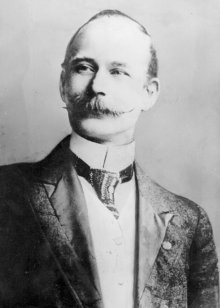
Frederick-seddon.jpg
A Liverpool born man who let greed get the better of him was hanged after he was found guilty of poisoning his tenant.  

Frederick Henry Seddon was born in Liverpool in 1872 and baptised at St Peters Church in Church Street. At the age of 21 he married his wife Margaret at St George's Church in Everton. They would have five children together. 

Seddon was an insurance agent and he was known to be energetic, respectable and charitable. During the Boer War he organised concerts at the Picton Lecture Hall in William Brown Street, with proceeds going to widows of servicemen.  At this time he was living at 88 Belmont Road, Anfield.

At the beginning of the 20th Century Seddon secured a position as superintendent with the Liverpool & Manchester was promoted to superintendent in his firm and moved to Buckinghamshire, where he began speculating in property. He bought a fourteen bedroom house in Tollington Park, North London in 1909 and the following year let the first floor to a wealthy spinster named Eliza Barrow. She moved in with Ernest Grant, the eight year old son of a friend who had died and who she was now the guardian of.

Eliza had substantial savings and annuities. However she agreed to allow Seddon to take a controlling interest in return for an annual sum and living rent free for life. 

88 Belmont Road
On 14th September 1911 Eliza Barrow died having suffered excruciating stomach pains. Just a month earlier, she and Ernest, along with Seddon's family, had holidayed together in Southend. Seddon then arranged for her to be buried in a communal plot instead of her family vault in Islington. 

When Frank Vonderahe, a cousin of Eliza's went to take over estate, he was informed by Seddon that there was nothing left after the funeral expenses and paying for Ernest's upkeep. Frank went to the police with his suspicions, leading to Eliza's body being exhumed on 15th November. A postmortem took place and two grains of arsenic were found in the stomach, leading to the arrest of Seddon and his wife. 

The trial took place at the Old Bailey, where it was proved Seddon's fifteen year old daughter Maggie had bought flypaper from a chemist. Against the advice of his counsel, Seddon conducted his own defence, suggesting that Eliza could have drank water that the flypapers had been getting soaked in. 

Seddon was found guilty and sentenced to death, but his wife Margaret was acquitted. He was hanged at Pentonville on 18th April 1912. Margaret returned to Liverpool, marrying American James Cameron just seven months later. She took the emigrated to America with him and the five children.

Friday, 9 November 2018

Killed Over a Cigarette

A man in a hostel was killed after he had denied a cigarette to another resident. 
At around 3am on Saturday 28th September 1957 Joseph Flynn, a frail 78 year old, was asleep in his dormitory bed at the Westminster House hostel in Kirkdale. This was a local authority run home situated in the former Kirkdale Industrial School building. He was woken by Patrick Hyland, who slept in the next bed, rummaging through his belongings. 


Kirkdale Industrial School (www.liverpoolpicturebook.com)
When Flynn remonstrated with 66 year old Hyland, he was met with a series of blows about the head. Hyland then went to the hostel office and said that a man was injured in the dormitory. Staff then  found Flynn to be conscious and even though he had blood coming from his nostrils, he refused medical attention.


Six hours later Flynn's condition was found to have deteriorated and he died at 930am. Detectives from Westminster Road police station attended and told Hyland that he would be detained on suspicion of causing the death. He responded that he had slapped Flynn, but only after being called a B*STARD.

A postmortem found that Flynn had a broken jaw and had died of cerebral haemorrhage due to multiple blows causing bruising to the brain. On being told of the postmortem results that evening. Hyland replied 'It was just a bout of fisticuffs'. After being charged with manslaughter, Hyland was remanded in custody at the Magistrates Court on the Monday morning. 

On 11th February 1958 Hyland admitted manslaughter, saying that he had been drinking ale, stout and surgical spirit and was looking for a cigarette. His defense counsel said 'If ever the expression demon drink had a meaning it was this case. For the rest of his life he will carry the burden of having killed a fellow creature for the price of a cigarette'. Hyland, described by the Liverpool Echo as a chronic drunkard, was jailed for fifteen months. 

Tuesday, 6 November 2018

Murder at the Blind Home


A partially sighted man in his seventies who killed a fellow resident of the care home where he resided was detained at Her Majesty's pleasure. 


Balliol Road in 1970s (www.liverpoolpicturebook.com)At 1pm on 1st December 1951 police were called to Connolly House in Balliol Road, a Bootle Corporation's home for the blind. On arrival they found 46 year old Margaret Hughes lying on a landing with a throat wound. She as taken to hospital but was dead on arrival.

Later that afternoon detectives took Frederick Wilson, a 76 year old partially sighted resident of the home, into custody.  Wilson admitted cutting Margaret's throat with a razor but when examined by Dr Brisley at Walton gaol, was found to be suffering from a progressive disease of the mind. At the Liverpool assizes on 14th February 1952, the judge accepted that he was unfit to plead and detained him at Her Majesty's pleasure. 

Connolly house later became a home for elder persons and was demolished in 2010 to make way for an extension to Hugh Baird College.